
How Do Ollas Work? A Simple Guide to Clay Plant Watering
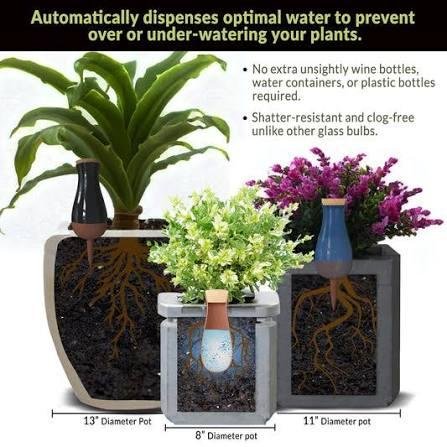
How Ollas Help Deliver Water Directly to Plant Roots
When watering plants, most people pour water onto the surface of the soil and wait for it to move downward.
But what if water could be stored underground and made available closer to the plant's roots?
That's the basic idea behind an Olla.
Ollas are traditional unglazed clay watering vessels that have been used for centuries as a simple way to provide moisture to plants. Today, the same basic principle can be used in container gardening, raised beds, and outdoor plant setups.
What Is an Olla?
An Olla is a porous clay container that is buried in soil and filled with water.
Because unglazed clay is porous, moisture can gradually move through the walls of the vessel and into the surrounding soil.
The basic setup is simple:
Fill Olla → Place in soil → Water moves through clay → Nearby roots access moisture
Instead of putting all the water on the surface, the moisture becomes available closer to the root zone.
Why Put Water Underground?
When you water from the surface, some water can evaporate before it reaches deeper into the soil.
This can be especially noticeable in hot or windy environments.
An underground reservoir changes where the moisture is introduced.
The Olla releases moisture into the surrounding soil rather than simply leaving water exposed on the surface.
This can make it an interesting option for gardeners who want a more gradual watering method.
How Does an Olla Know When to Release Water?
An Olla doesn't contain electronics, sensors, or a timer.
Its operation is based on the properties of porous clay and the moisture conditions surrounding it.
When the surrounding soil becomes drier, moisture can move outward from the clay vessel.
When the soil is already sufficiently moist, the movement of water can slow down.
This creates a passive watering process.
Why Are Ollas Made From Unglazed Clay?
The material is essential.
Glazed pottery has a sealed surface, while unglazed terracotta or clay remains porous.
That porosity allows water to interact with the surrounding soil.
It's a simple example of how an old material can be used to solve a modern gardening problem.
Where Can You Use an Olla?
Ollas can be useful in several types of gardening environments.
Raised Beds
An Olla can be placed among plants in a raised bed to provide moisture beneath the surface.
Vegetable Gardens
Plants growing close to the Olla can access moisture from the surrounding soil.
Outdoor Containers
Depending on the size and setup, Ollas can also be useful for certain larger containers.
Garden Beds
They can provide a passive watering option without requiring an automated irrigation system.
SmartiLiving includes Ollas among its self-watering products, alongside terracotta watering spikes and other plant-watering solutions.
Explore SmartiLiving's Olla Watering Products
Ollas vs. Traditional Watering
Traditional watering usually looks like this:
Water → Soil surface → Roots
An Olla changes the process:
Water → Clay vessel → Surrounding soil → Roots
Neither method is automatically better for every plant.
The advantage of an Olla is the gradual and localized way it can provide moisture.
Why Gardeners May Find This Useful
An Olla can reduce the need for frequent surface watering.
This can be particularly convenient for people who:
- Have busy schedules
- Grow plants in raised beds
- Travel occasionally
- Maintain vegetable gardens
- Want a passive watering method
- Prefer simple gardening systems
However, plant requirements still matter.
Some plants prefer drier conditions and may not be suitable for consistently moist soil.
How to Set Up an Olla
Using an Olla is relatively straightforward.
1. Choose the location
Place it near the plants you want to water.
2. Bury the vessel
Position the Olla in the soil while leaving the opening accessible.
3. Fill it with water
Add water to the reservoir.
4. Cover the opening
A cover can help reduce debris entering the vessel and limit unnecessary evaporation.
5. Monitor the soil
Observe how quickly the water is being used and how the plants respond.
The first few days are especially useful for understanding how the system behaves in your specific environment.
Don't Expect Every Olla to Work the Same Way
Water movement depends on several factors.
These include:
- Soil type
- Soil moisture
- Temperature
- Plant size
- Root density
- Olla size
- Weather
- Humidity
An Olla used in loose soil during a hot summer may behave differently from one placed in compact soil in a cooler environment.
That's why observation is important.
Ollas and Vacation Gardening
One of the biggest challenges for gardeners is leaving plants unattended.
If you're away for several days, an Olla can provide a reservoir of water that gradually interacts with the surrounding soil.
But you should always test the system before relying on it during a trip.
Set it up while you're home.
Check the water level.
Observe the soil.
Look at the plants.
Then adjust the setup if necessary.
A Simple Alternative to Complicated Irrigation
Modern gardening can involve pumps, timers, pipes, sensors, and automated controllers.
Those systems can be useful, but they're not necessary for every garden.
An Olla takes a much simpler approach.
There's no programming.
No electrical connection.
No complicated installation.
Just a porous clay vessel and water.
That simplicity is one of the reasons Ollas remain interesting to modern gardeners.
Final Thoughts
Ollas show that effective gardening doesn't always require complicated technology.
A simple porous clay vessel can act as a passive water reservoir, gradually making moisture available to the surrounding soil.
For gardeners managing raised beds, outdoor containers, or vegetable gardens, this approach can provide another way to think about watering.
If you're looking for a simple method to reduce frequent surface watering, Ollas can be an interesting addition to your plant-care routine.
See SmartiLiving's self-watering collection
Sometimes the simplest watering technology is the one that's been working for centuries.
- Business
- Technology
- Finance
- Health
- Fashion
- Lifestyle
- Travel
- Food
- Education
- Real Estate
- Automobile
- Entertainment
- Sports
- Pets
- Home Decor
- Gardening
- Parenting
- Wedding
- Beauty
- Gaming
- Photography
- Music
- Movies
- News
- Politics
- Religion
- Astrology
- Law
- Insurance
- Jobs
- Freelancing
- Remote Work
- Blogging
- E-commerce
- WordPress
- OpenCart
- Social Media
- Graphic Design
- Web Design
- Programming
- Mobile Apps
- Artificial Intelligence
- SaaS
- Cyber Security
- Cloud Computing
- Hosting
- SEO
- Content Writing
- Email Marketing
- Affiliate Marketing
- YouTube
- Podcasting
- Interior Design
- DIY
- Crafts
- Art
- Architecture
- Environment
- Agriculture
- Animals
- Fishing
- Hunting
- Survival
- Outdoor
- Fitness
- Yoga
- Meditation
- Mental Health
- Skin Care
- Hair Care
- Makeup
- Jewelry
- Sarees
- Salwar Kameez
- Lehenga Choli
- Kurtis
- Men Fashion
- Women Fashion
- Kids Fashion
- Footwear
- Bags
- Watches
- Luxury
- Shopping
- Coupons
- Electronics
- Smartphones
- Laptops
- Tablets
- Cameras
- Home Appliances
- Kitchen
- Furniture
- Cleaning
- Baby Care
- Senior Care
- Relationships
- Self Improvement
- Motivation
- Quotes
- Festivals
- Events
- Careers
- Remote Work
- Productivity
- Wholesale
- Manufacturing
- Import Export
- Logistics
- Supply Chain
- Human Resources
- Customer Service
