
Automotive Brake Pad Manufacturing Plant Project Report 2026: Raw Material Requirements and Unit Setup
IMARC Group’s “Automotive Brake Pad Manufacturing Plant Project Report 2026: Industry Trends, Plant Setup, Machinery, Raw Materials, Investment Opportunities, Cost and Revenue” report provides a comprehensive guide on how to successfully set up a automotive brake pad plant. The report offers clarifications on various aspects, such as unit operations, raw material requirements, utility supply, infrastructural needs, machinery models, labour necessities, transportation timelines, packaging costs, etc.
In addition to the operational aspects, the report also provides in-depth insights into automotive brake pad manufacturing process, project economics, encompassing vital aspects such as capital investments, automotive brake pad manufacturing plant cost, project funding, operating expenses, income and expenditure projections, fixed and variable costs, direct and indirect expenses, expected ROI, net present value (NPV), profit and loss account, and thorough financial analysis, among other crucial metrics. With this comprehensive roadmap, entrepreneurs and stakeholders can make informed decisions and venture into a successful automotive brake pad business plan and manufacturing unit.
What is an Automotive Brake Pad?
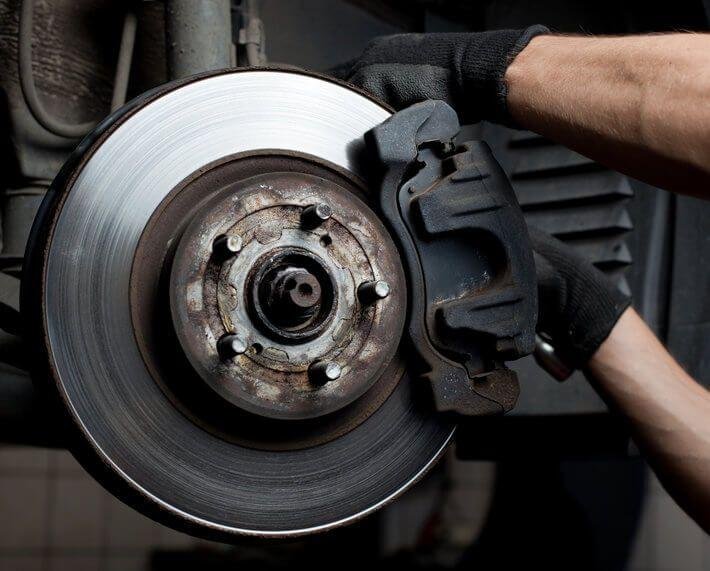
An automotive brake pad is a precision friction component used in a vehicle's disc braking system that, when hydraulically actuated against the brake rotor, generates the controlled friction force necessary to decelerate or stop the vehicle safely and reliably. Brake pads are manufactured from four main material categories: organic (non-asbestos), semi-metallic, ceramic, and sintered metal, each offering distinct trade-offs in noise levels, heat dissipation, rotor wear, and stopping performance suited to different vehicle types and driving conditions. The manufacturing process involves raw material preparation, compound mixing and grinding, cold and hot molding under high pressure, baking and curing, grinding and shaping to dimensional tolerances, attachment of backplate hardware, chamfering, and packaging. The proposed manufacturing facility is designed with an annual production capacity ranging between 5–20 million units, with raw material costs — particularly aramid fibers — accounting for approximately 60–70% of total operating expenses and gross profit margins typically ranging between 30–40%.
Market Trend and Drivers of Automotive Brake Pad:
The automotive brake pad market is primarily driven by increasing global vehicle production volumes, rising consumer emphasis on vehicle safety and advanced braking technologies, and growing adoption of electric and hybrid vehicles requiring specialized brake pads for regenerative braking systems. The global automotive brake pad market size was valued at USD 7.24 Billion in 2025. According to IMARC Group estimates, the market is expected to reach USD 11.15 Billion by 2034, exhibiting a CAGR of 4.9% from 2026 to 2034. The 93.9 million vehicles produced worldwide in 2023 and China's 25.8 million and the U.S.'s 15.5 million unit vehicle sales in 2023 reflect the robust scale of global vehicle demand driving consistent brake pad consumption. The rapidly expanding EV fleet creating new demand for regenerative braking-compatible low-dust ceramic and sintered brake pads, growth in the automotive aftermarket replacement segment, and increasingly stringent vehicle safety regulations mandating high-performance braking systems are significantly supporting market growth globally.
Request a Sample Report: https://www.imarcgroup.com/automotive-brake-pad-manufacturing-plant-project-report/requestsample
How to Setup an Automotive Brake Pad Manufacturing Plant?
Setting up an automotive brake pad manufacturing plant requires evaluating several key factors — from automotive brake pad manufacturing plant cost and machinery requirements to operational efficiency and quality control. Some of the major considerations include:
- Detailed Process Flow: The automotive brake pad manufacturing process involves multiple stages, including friction material compound preparation and mixing, cold pre-forming, hot press molding under high temperature and pressure, baking and curing in continuous ovens, grinding and chamfering to dimensional tolerances, backplate cleaning and bonding, quality inspection, and packaging. Key aspects include compound formulation control, temperature and pressure management, and technical testing.
- Site Selection: The plant location should provide easy access to key raw materials such as aramid fibers, metal powders (copper/steel), phenolic resins, abrasives, graphite, and fillers, along with strong transportation infrastructure and proximity to automotive OEM plants and aftermarket distribution centers to reduce logistics costs.
- Plant Layout Optimization: An efficient layout is essential to streamline workflow, manage dust generation from compound mixing, and ensure worker safety. Separate zones for raw material storage, compound mixing, pre-forming, hot molding, curing ovens, grinding, assembly, quality testing, and finished goods packaging should be planned with appropriate dust extraction systems.
- Equipment Selection: Selecting durable and high-performance manufacturing equipment is crucial. Equipment may include precision weighing and mixing systems, cold pre-form presses, hot molding presses with temperature and tonnage control, continuous curing ovens, double-disc and surface grinding machines, chamfering machines, assembly stations, and automated packaging lines.
- Raw Material Sourcing: Reliable sourcing of aramid fibers, phenolic resins, copper and steel powders, graphite, barium sulfate fillers, friction modifiers, steel backplates, and packaging materials is necessary to maintain consistent friction performance, noise and wear characteristics, and stable production operations throughout the year.
- Safety and Environmental Compliance: The facility must comply with industrial safety and environmental regulations, particularly regarding respirable dust from aramid fiber and graphite handling, phenol resin fume extraction, copper powder management (under increasing regulatory scrutiny), and effluent treatment. Worker respiratory protection and continuous air quality monitoring are critical compliance priorities.
- Quality Assurance Systems: A strong quality management system should be established to ensure friction coefficient (cold and hot), wear rate, compressibility, shear strength, noise and squeal characteristics, and compliance with ECE R90, FMVSS, or OEM-specific brake pad performance standards through dynamometer testing, dimensional inspection, and batch release protocols.
Requirements to Setup an Automotive Brake Pad Plant:
- Funds
- Machinery
- Lands
Types of Costs to Setup an Automotive Brake Pad Factory:
- Land, Location and Site Development Cost
- Plant Layout Cost
- Automotive Brake Pad Plant Machinery Cost
- Raw Material Requirements and Costs
- Packaging Requirements and Costs
- Transportation Requirements and Costs
- Utility Requirements and Costs
- Human Resource Requirements and Costs
Project Economics:
- Capital Investments
- Operating Costs
- Expenditure Projections
- Revenue Projections
- Taxation and Depreciation
- Profit Projections
- Financial Analysis
Ask Analyst for Customized Report: https://www.imarcgroup.com/request?type=report&id=11847&flag=C
How IMARC Can Help?
IMARC Group is a global management consulting firm that helps the world's most ambitious changemakers to create a lasting impact. The company provides a comprehensive suite of market entry and expansion services. IMARC offerings include thorough market assessment, feasibility studies, company incorporation assistance, automotive brake pad factory setup support, regulatory approvals and licensing navigation, branding, marketing and sales strategies, competitive landscape and benchmarking analyses, pricing and cost research, and procurement research.
Services:
- Plant Setup
- Factory Auditing
- Regulatory Approvals, and Licensing
- Company Incorporation
- Incubation Services
- Recruitment Services
- Marketing and Sales
Contact Us:
IMARC Group
134 N 4th St. Brooklyn, NY 11249, USA
Email: sales@imarcgroup.com
Tel No:(D) +91 120 433 0800
United States: (+1-201971-6302)
- Business
- Technology
- Finance
- Health
- Fashion
- Lifestyle
- Travel
- Food
- Education
- Real Estate
- Automobile
- Entertainment
- Sports
- Pets
- Home Decor
- Gardening
- Parenting
- Wedding
- Beauty
- Gaming
- Photography
- Music
- Movies
- News
- Politics
- Religion
- Astrology
- Law
- Insurance
- Jobs
- Freelancing
- Remote Work
- Blogging
- E-commerce
- WordPress
- OpenCart
- Social Media
- Graphic Design
- Web Design
- Programming
- Mobile Apps
- Artificial Intelligence
- SaaS
- Cyber Security
- Cloud Computing
- Hosting
- SEO
- Content Writing
- Email Marketing
- Affiliate Marketing
- YouTube
- Podcasting
- Interior Design
- DIY
- Crafts
- Art
- Architecture
- Environment
- Agriculture
- Animals
- Fishing
- Hunting
- Survival
- Outdoor
- Fitness
- Yoga
- Meditation
- Mental Health
- Skin Care
- Hair Care
- Makeup
- Jewelry
- Sarees
- Salwar Kameez
- Lehenga Choli
- Kurtis
- Men Fashion
- Women Fashion
- Kids Fashion
- Footwear
- Bags
- Watches
- Luxury
- Shopping
- Coupons
- Electronics
- Smartphones
- Laptops
- Tablets
- Cameras
- Home Appliances
- Kitchen
- Furniture
- Cleaning
- Baby Care
- Senior Care
- Relationships
- Self Improvement
- Motivation
- Quotes
- Festivals
- Events
- Careers
- Remote Work
- Productivity
- Wholesale
- Manufacturing
- Import Export
- Logistics
- Supply Chain
- Human Resources
- Customer Service
