
Why Every Business Needs Web Application Penetration Testing to Secure Digital Platforms
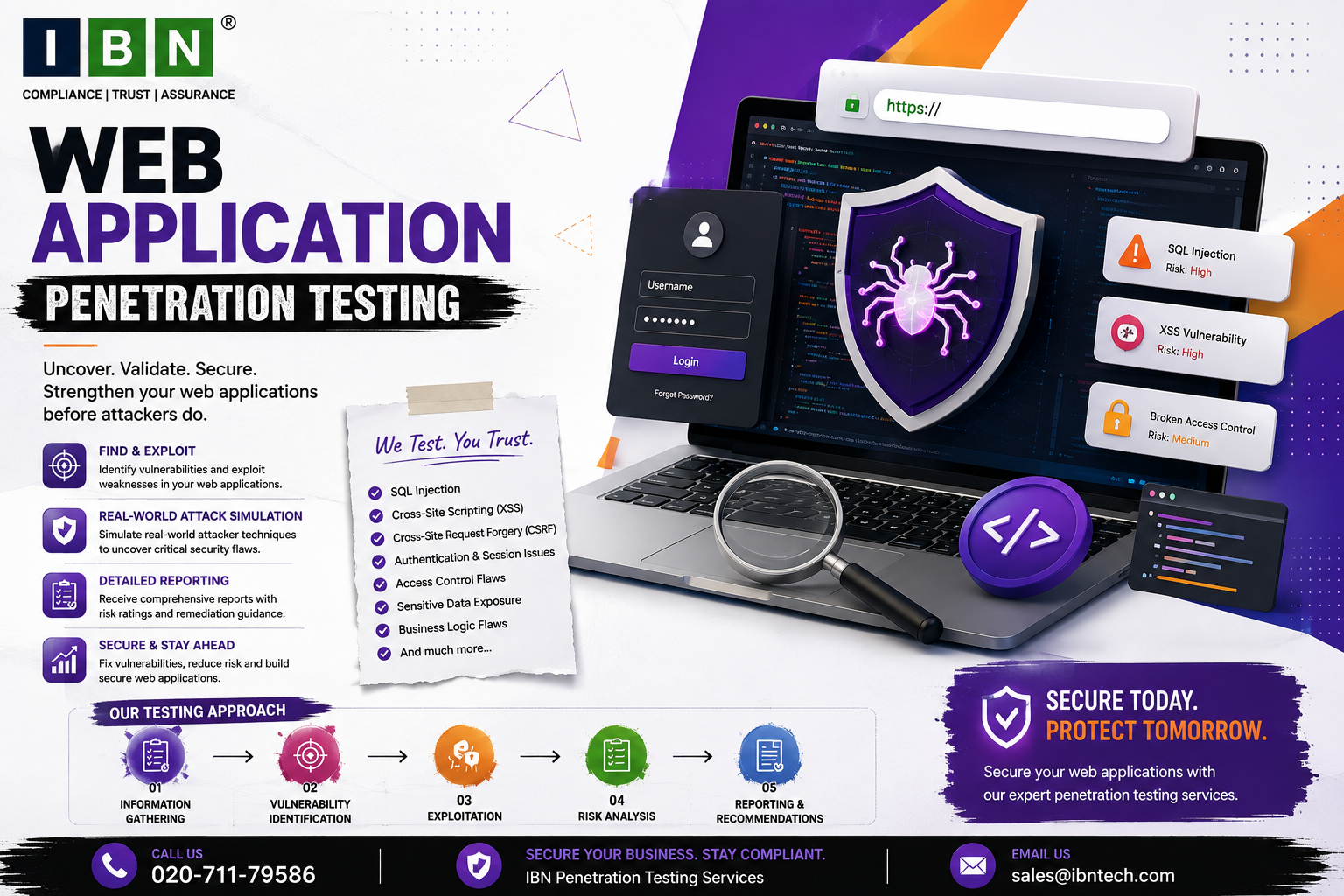
Web applications have become the foundation of digital business operations across India. Banks deliver online banking services, healthcare providers manage patient portals, manufacturers streamline supply chains, retailers operate e-commerce platforms, and technology companies serve customers through cloud-based applications. As businesses become increasingly dependent on web applications, cybercriminals continue targeting these platforms to steal sensitive information, disrupt operations, and exploit security weaknesses. This makes web application penetration testing an essential investment for organizations seeking to protect their digital assets.
Unlike basic vulnerability scans, web application penetration testing simulates real-world attack scenarios to determine whether attackers can exploit weaknesses in an application. It enables organizations to identify critical security flaws before they impact customers or business operations. IBN Technologies LLC provides enterprise-grade web application penetration testing services that help Indian enterprises strengthen application security, reduce cyber risks, and support compliance with evolving cybersecurity expectations.
What Is Web Application Penetration Testing?
Web application penetration testing is an authorized cybersecurity assessment performed by experienced ethical hackers to evaluate the security of web-based applications. The objective is to identify vulnerabilities, validate exploitability, and recommend corrective actions before cybercriminals can compromise the application.
A comprehensive assessment evaluates:
- User authentication and authorization
- Session management
- Input validation
- Business logic
- API security
- Database interactions
- Server configurations
- Sensitive data protection
Rather than relying solely on automated scanning tools, penetration testing combines manual expertise with advanced testing techniques to uncover complex vulnerabilities that automated tools may overlook.
How Does Web Application Penetration Testing Differ from Vulnerability Assessment?
Although both activities improve application security, they serve different purposes within a cybersecurity program.
|
Feature |
Vulnerability Assessment |
Web Application Penetration Testing |
|
Primary Objective |
Identify known vulnerabilities |
Validate exploitability through ethical attacks |
|
Testing Method |
Automated scanning with manual verification |
Manual attack simulation by experienced testers |
|
Coverage |
Broad security review |
Targeted assessment of application security |
|
Deliverables |
Prioritized vulnerability report |
Exploitation evidence with business impact analysis |
|
Business Benefit |
Visibility into potential risks |
Validation of application security effectiveness |
Combining both assessments provides organizations with a comprehensive understanding of application security and remediation priorities.
How Does the Web Application Penetration Testing Process Work?
A structured testing methodology ensures thorough security evaluation while minimizing operational disruption.
Planning and Scope Definition
Security specialists identify application components, APIs, authentication mechanisms, user roles, cloud infrastructure, and business objectives. Testing boundaries are established before the assessment begins.
Information Gathering
Ethical hackers analyze application architecture, exposed endpoints, APIs, user workflows, technologies, and publicly accessible information to understand the application's attack surface.
Vulnerability Identification
Potential weaknesses such as authentication flaws, insecure configurations, broken access controls, input validation issues, session management vulnerabilities, and business logic weaknesses are identified and verified.
Controlled Exploitation
Security professionals simulate realistic cyberattacks to validate whether identified vulnerabilities can be exploited. Testing is carefully controlled to prevent disruption to production environments while demonstrating actual business risk.
Reporting and Remediation Guidance
Organizations receive executive summaries and technical reports containing detailed findings, severity ratings, exploitation evidence, and prioritized remediation recommendations to improve application security.
Retesting
Once corrective actions have been implemented, follow-up testing confirms that vulnerabilities have been successfully resolved and validates improvements to the application's security posture.
Why Is Web Application Penetration Testing Important for Indian Businesses?
Organizations across banking, healthcare, retail, education, manufacturing, logistics, and technology increasingly rely on customer-facing web applications to deliver essential services. A security weakness in these applications can expose confidential information and negatively affect customer trust.
Regular web application penetration testing helps organizations:
- Identify exploitable application vulnerabilities.
- Prevent unauthorized access to sensitive business data.
- Reduce the likelihood of ransomware attacks and data breaches.
- Strengthen customer trust and brand reputation.
- Protect revenue-generating digital platforms.
- Improve application resilience against evolving cyber threats.
- Support secure software development initiatives.
By identifying weaknesses before attackers do, organizations can significantly reduce cyber risk and operational disruption.
How Does Web Application Penetration Testing Support Compliance in India?
Organizations handling financial transactions, healthcare records, customer information, and confidential business data are expected to continuously evaluate the effectiveness of their application security controls.
Regular testing helps organizations:
- Support cybersecurity expectations for financial institutions operating under RBI guidelines.
- Improve incident preparedness aligned with CERT-In reporting requirements.
- Demonstrate proactive cybersecurity governance during audits.
- Validate application security controls protecting sensitive information.
- Strengthen third-party and API security management.
- Improve enterprise-wide cyber risk governance through continuous security assessments.
Integrating application security testing into routine cybersecurity programs supports both regulatory readiness and long-term security maturity.
How Often Should Organizations Conduct Web Application Penetration Testing?
Application security testing should become part of an organization's software development and cybersecurity lifecycle.
Recommended testing frequency includes:
- At least once every year.
- Before launching customer-facing applications.
- Following major software updates.
- After cloud migrations.
- Following infrastructure changes.
- Before compliance assessments.
- Whenever critical vulnerabilities or emerging threats are identified.
Routine testing ensures applications remain secure as technologies, user requirements, and cyber threats evolve.
Why Choose IBN Technologies LLC for Web Application Penetration Testing?
IBN Technologies LLC delivers enterprise-grade web application penetration testing services that help organizations proactively identify vulnerabilities and strengthen application security. Supported by ISO 9001:2015, ISO/IEC 20000-1:2018, and ISO/IEC 27001:2022 certifications, the company combines experienced cybersecurity professionals with structured testing methodologies to provide actionable security insights.
Its web application security capabilities include:
- Black-box, gray-box, and white-box penetration testing
- API security assessments
- Authentication and authorization testing
- Business logic validation
- Secure configuration reviews
- Cloud-hosted application security testing
- Executive reporting with prioritized remediation guidance
- Post-remediation verification
This proactive approach enables organizations to strengthen secure development practices, reduce cyber risk, and confidently protect business-critical web applications.
Final Thoughts
As organizations continue expanding their digital presence, application security has become a critical business priority. Web application penetration testing enables organizations to identify exploitable vulnerabilities, validate security controls, and strengthen defenses before attackers can compromise customer data or disrupt business operations.
For Indian enterprises, banks, healthcare providers, manufacturers, retailers, and technology startups, regular application security testing is an essential investment in business continuity and customer trust. IBN Technologies LLC delivers comprehensive web application penetration testing services that help organizations secure digital platforms, improve compliance readiness, reduce cyber risks, and build resilient applications capable of supporting long-term business growth.
- Business
- Technology
- Finance
- Health
- Fashion
- Lifestyle
- Travel
- Food
- Education
- Real Estate
- Automobile
- Entertainment
- Sports
- Pets
- Home Decor
- Gardening
- Parenting
- Wedding
- Beauty
- Gaming
- Photography
- Music
- Movies
- News
- Politics
- Religion
- Astrology
- Law
- Insurance
- Jobs
- Freelancing
- Remote Work
- Blogging
- E-commerce
- WordPress
- OpenCart
- Social Media
- Graphic Design
- Web Design
- Programming
- Mobile Apps
- Artificial Intelligence
- SaaS
- Cyber Security
- Cloud Computing
- Hosting
- SEO
- Content Writing
- Email Marketing
- Affiliate Marketing
- YouTube
- Podcasting
- Interior Design
- DIY
- Crafts
- Art
- Architecture
- Environment
- Agriculture
- Animals
- Fishing
- Hunting
- Survival
- Outdoor
- Fitness
- Yoga
- Meditation
- Mental Health
- Skin Care
- Hair Care
- Makeup
- Jewelry
- Sarees
- Salwar Kameez
- Lehenga Choli
- Kurtis
- Men Fashion
- Women Fashion
- Kids Fashion
- Footwear
- Bags
- Watches
- Luxury
- Shopping
- Coupons
- Electronics
- Smartphones
- Laptops
- Tablets
- Cameras
- Home Appliances
- Kitchen
- Furniture
- Cleaning
- Baby Care
- Senior Care
- Relationships
- Self Improvement
- Motivation
- Quotes
- Festivals
- Events
- Careers
- Remote Work
- Productivity
- Wholesale
- Manufacturing
- Import Export
- Logistics
- Supply Chain
- Human Resources
- Customer Service
