
Aerospace Fluoropolymers Market Forecast Points to USD 4.2 Billion by 2032 Amid Expanding Electrical Applications
Market Overview and Growth Outlook
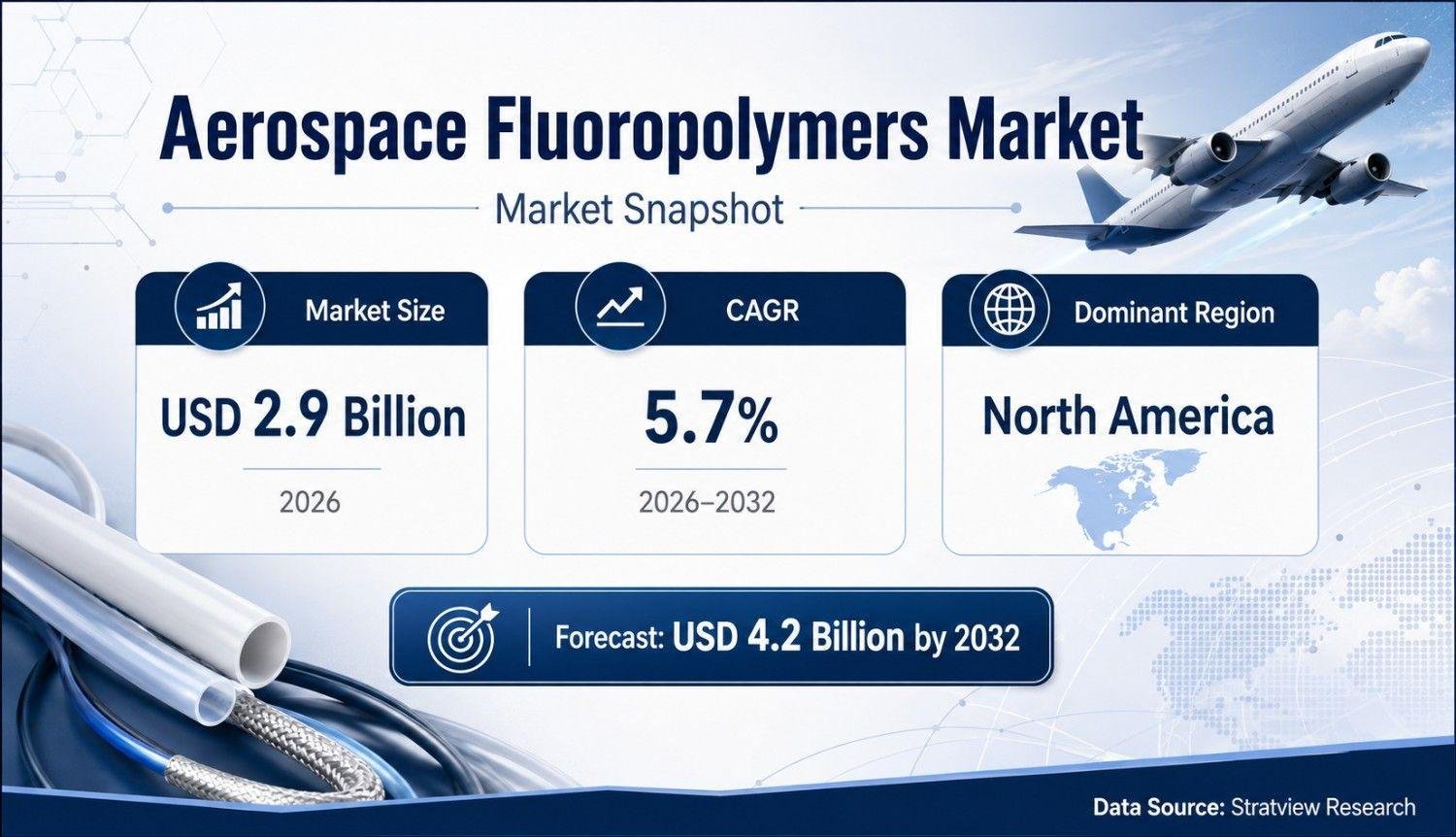
Annual demand in the Aerospace Fluoropolymers Market is expected to rise from USD 2.9 billion in 2026 to USD 4.2 billion in 2032. The 2026 estimate represents 7.8% growth over the USD 2.7 billion recorded in 2025. This expansion reflects the increasing use of high-performance materials across complex aerospace applications.
The Aerospace Fluoropolymers Market is expected to grow at a CAGR of 5.7% during 2026-2032. Rising requirements across aircraft wiring, insulation, seals, gaskets, tubing, fuel systems, coatings, and electronic components are supporting the market forecast. Demand is reinforced by aircraft electrification, higher production, lightweighting, and increasingly demanding operating environments.
The Aerospace Fluoropolymers Market forecast highlights a shift toward applications where material failure carries significant operational consequences. Thermal stability supports high-temperature performance, chemical resistance protects components exposed to aggressive fluids, and electrical insulation addresses increasingly complex aircraft power systems. These combined properties explain the expanding role of fluoropolymers in advanced aerospace platforms.
Request a free sample report:
https://www.stratviewresearch.com/Request-Sample/aerospace-fluoropolymers-market#form
Market Segmentation Analysis
By product type, the categories are Polytetrafluoroethylene (PTFE), Fluorinated Ethylene Propylene (FEP), Perfluoro alkoxy Alkane (PFA), Ethylene Tetrafluoroethylene (ETFE), Polyvinylidene Fluoride (PVDF), and Others. Polytetrafluoroethylene (PTFE) is expected to remain dominant due to its combination of thermal stability, chemical resistance, low friction, and electrical insulation.
By application type, the categories are Wire & Cables, Seals & Gaskets, Tubing & Fluid, Electrical & Electronics, and Others. Wire & Cables are expected to capture the largest market share throughout the forecast period. Advanced avionics and aircraft electrification increase both the extent and performance requirements of aircraft electrical wiring networks.
By aircraft type, the categories are Commercial Aircraft, Military Aircraft, Business Jets, Helicopters, Spacecraft, and Others. Commercial Aircraft are anticipated to remain dominant, supported by rising passenger traffic, fleet modernization, and aircraft deliveries. Fluoropolymers serve wiring, fuel, sealing, insulation, and fluid-handling requirements across these platforms.
By end-use type, the categories are OEMs and Aftermarket. OEMs are expected to remain dominant as fluoropolymer-based components are integrated during aircraft manufacturing. Aftermarket demand is connected to the maintenance, repair, and overhaul of operating fleets.
Regional Market Insights
North America is projected to remain the leading regional market. Major aircraft manufacturers, aerospace suppliers, defense contractors, and research programs create an established demand base. Commercial aviation activity, defense spending, and investment in next-generation aerospace technologies further support the regional market.
Asia-Pacific is projected to deliver the fastest growth. Aircraft procurement, expanding aerospace manufacturing, passenger-traffic growth, and investment in domestic aviation and space programs are increasing the region’s requirement for advanced fluoropolymer products and components.
Emerging Trends Shaping the Aerospace Fluoropolymers Market
The transition toward more-electric aircraft is expanding demand for high-performance insulation. Fluoropolymers are increasingly relevant where high-voltage electrical systems must operate safely under thermal stress, vibration, chemical exposure, and demanding service conditions.
Material lightweighting is developing alongside electrification. Aircraft manufacturers require lower-weight materials without sacrificing heat resistance, durability, or chemical stability. Fluoropolymer applications in wiring, tubing, seals, and insulation systems directly align with these requirements.
Key Growth Drivers of the Market
- More-electric aircraft require enhanced electrical insulation, increasing fluoropolymer demand across wiring and electronic applications.
- Advanced thermal-management systems use materials that retain performance under elevated temperatures and demanding operating conditions.
- Aircraft lightweighting supports fluoropolymer adoption across components where lower weight and high durability are both required.
- Fleet modernization and aircraft deliveries increase OEM demand for wiring, sealing, fluid-handling, and insulation materials.
- Spacecraft and defense platforms expand material requirements for chemical resistance, thermal stability, and long-duration reliability.
Competitive Landscape
Top Companies in the Market
AGC Group
Arkema S.A
Chemours
Daikin Industries
DuPont
Solvay
Conclusion and Strategic Outlook
The Aerospace Fluoropolymers Market is expected to reach USD 4.2 billion in 2032 after growing at a CAGR of 5.7% from 2026. The strategic outlook centers on electrification, advanced avionics, aircraft production, lightweighting, and extreme-environment performance. Wire & Cables will remain a central application, while PTFE, Commercial Aircraft, OEMs, and North America retain leading positions.
FAQs – Aerospace Fluoropolymers Market
1. What revenue is the Aerospace Fluoropolymers Market forecast to generate?
The market is forecast to generate USD 4.2 billion in annual demand by 2032. Its estimated value is USD 2.9 billion in 2026.
2. What growth rate supports the forecast?
The Aerospace Fluoropolymers Market is expected to expand at a CAGR of 5.7% during 2026-2032. The market is projected to become almost 1.5 times larger than its 2026 value.
3. What is driving the market forecast?
The forecast is supported by aircraft production, advanced avionics, electrification, lightweighting, and demand for durable materials. Applications span wiring, fuel systems, sealing, tubing, coatings, and electronics.
4. How does regional demand differ?
North America is expected to remain the largest market because of its established aerospace and defense ecosystem. Asia-Pacific is forecast to record the fastest growth.
5. Which challenges may influence future returns?
PFAS-related regulations can increase compliance and reporting costs. Aerospace-grade processing expenses and fluorspar supply and price volatility may also affect margins and supply-chain planning.
- Business
- Technology
- Finance
- Health
- Fashion
- Lifestyle
- Travel
- Food
- Education
- Real Estate
- Automobile
- Entertainment
- Sports
- Pets
- Home Decor
- Gardening
- Parenting
- Wedding
- Beauty
- Gaming
- Photography
- Music
- Movies
- News
- Politics
- Religion
- Astrology
- Law
- Insurance
- Jobs
- Freelancing
- Remote Work
- Blogging
- E-commerce
- WordPress
- OpenCart
- Social Media
- Graphic Design
- Web Design
- Programming
- Mobile Apps
- Artificial Intelligence
- SaaS
- Cyber Security
- Cloud Computing
- Hosting
- SEO
- Content Writing
- Email Marketing
- Affiliate Marketing
- YouTube
- Podcasting
- Interior Design
- DIY
- Crafts
- Art
- Architecture
- Environment
- Agriculture
- Animals
- Fishing
- Hunting
- Survival
- Outdoor
- Fitness
- Yoga
- Meditation
- Mental Health
- Skin Care
- Hair Care
- Makeup
- Jewelry
- Sarees
- Salwar Kameez
- Lehenga Choli
- Kurtis
- Men Fashion
- Women Fashion
- Kids Fashion
- Footwear
- Bags
- Watches
- Luxury
- Shopping
- Coupons
- Electronics
- Smartphones
- Laptops
- Tablets
- Cameras
- Home Appliances
- Kitchen
- Furniture
- Cleaning
- Baby Care
- Senior Care
- Relationships
- Self Improvement
- Motivation
- Quotes
- Festivals
- Events
- Careers
- Remote Work
- Productivity
- Wholesale
- Manufacturing
- Import Export
- Logistics
- Supply Chain
- Human Resources
- Customer Service
