
The Role of Logistics Fleet Management Software in Modern Transportation
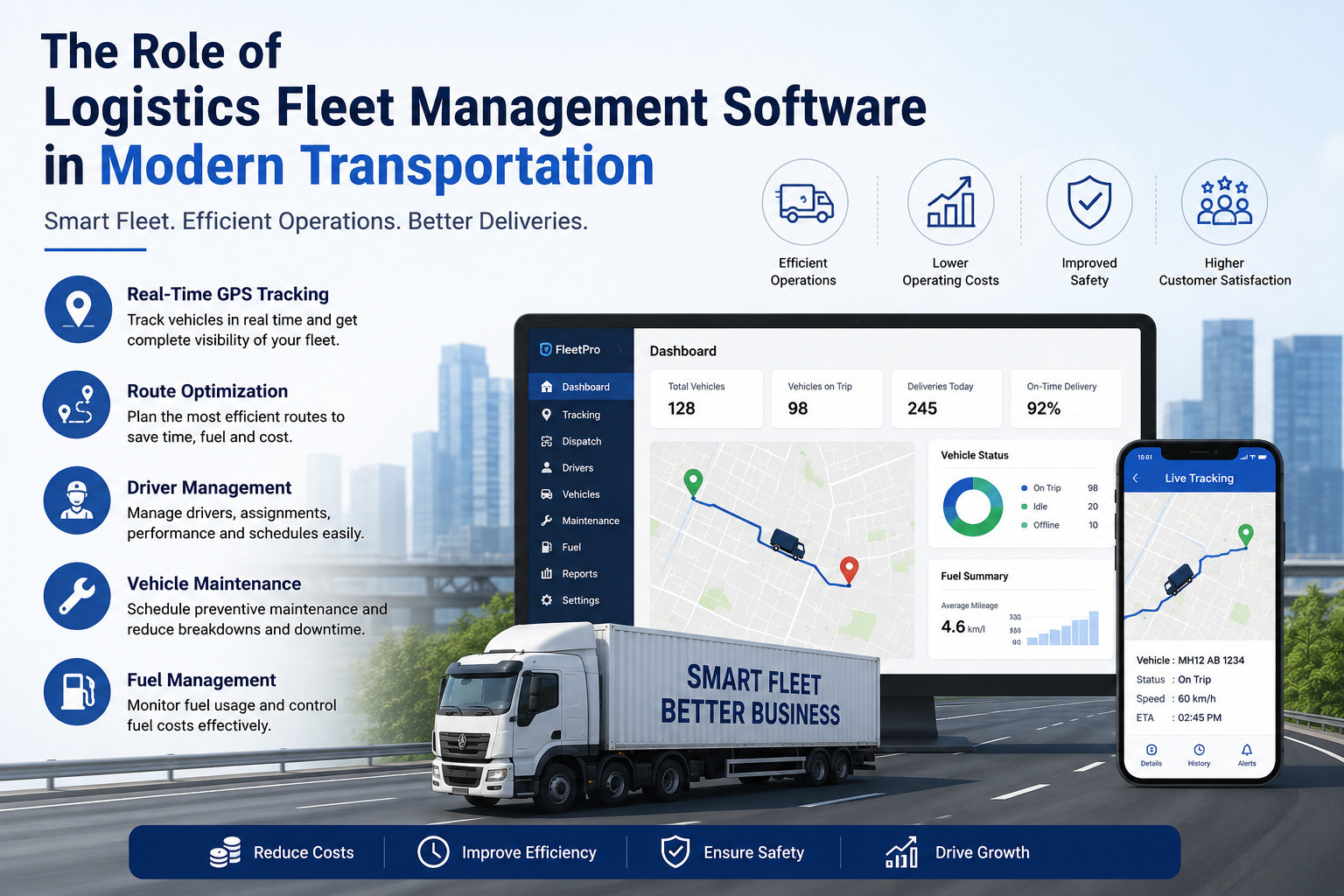
Modern transportation is becoming increasingly complex. Logistics companies and transport businesses must manage multiple vehicles, drivers, shipments, routes, fuel costs, maintenance schedules, and customer expectations every day. Managing these operations manually can result in delays, higher expenses, inefficient fleet utilization, and limited visibility.
This is where Logistics Fleet Management Software plays an important role. By combining vehicle tracking, route optimization, driver management, maintenance, dispatch, and reporting in one centralized platform, businesses can streamline their transportation operations and make better decisions.
In this guide, we'll explore the role of Logistics Fleet Management Software in modern transportation, its key features, benefits, and how it helps logistics businesses build more efficient and scalable operations.
What Is Logistics Fleet Management Software?
Logistics Fleet Management Software is a digital solution that helps businesses manage and monitor their fleet operations from a single platform. It allows logistics companies to track vehicles, manage drivers, plan routes, schedule maintenance, monitor fuel usage, and analyze fleet performance.
Instead of depending on spreadsheets, paperwork, and disconnected systems, businesses can centralize their transportation data and automate routine processes.
Whether a company operates a small fleet or manages hundreds of commercial vehicles, fleet management software provides the visibility and control needed to improve daily transportation operations.
Why Fleet Management Is Important in Modern Transportation
Transportation businesses operate in a highly competitive environment where efficiency and speed directly affect profitability. Rising fuel prices, traffic congestion, vehicle maintenance costs, and increasing delivery expectations make fleet management more challenging.
Without an efficient fleet management system, businesses may face:
-
Unplanned vehicle downtime
-
Rising fuel expenses
-
Inefficient routes
-
Delayed deliveries
-
Poor vehicle utilization
-
Manual dispatch processes
-
Limited driver visibility
-
Difficulty monitoring operational costs
Logistics Fleet Management Software helps solve these challenges by connecting fleet operations through automation and real-time data.
The Role of Logistics Fleet Management Software in Modern Transportation
Provides Real-Time Fleet Visibility
Real-time vehicle tracking is one of the most important capabilities of modern fleet management software.
GPS technology allows fleet managers to monitor vehicle locations, trip progress, and route deviations from a centralized dashboard. This visibility helps businesses identify delays quickly and take corrective action.
It also enables companies to provide customers with accurate delivery updates, improving transparency and trust.
Improves Route Planning and Optimization
Inefficient routes can increase fuel consumption, travel time, and vehicle wear.
Logistics Fleet Management Software uses route optimization to identify efficient routes based on delivery locations, traffic conditions, and trip requirements. This helps drivers spend less time on the road while completing deliveries more efficiently.
Optimized routing also reduces unnecessary mileage and helps businesses control transportation costs.
Simplifies Fleet and Driver Management
Managing vehicles and drivers manually becomes difficult as a fleet grows.
Fleet management software provides a centralized system for managing vehicle information, driver assignments, trip schedules, and performance data.
Managers can assign drivers to trips, monitor their activities, and track important fleet information without relying on multiple spreadsheets or manual records.
Supports Preventive Vehicle Maintenance
Unexpected vehicle breakdowns can cause delivery delays and increase repair costs.
Fleet management software helps businesses schedule preventive maintenance based on service intervals, mileage, or vehicle usage. Automated maintenance reminders ensure that vehicles receive timely servicing.
This approach reduces unexpected downtime, improves vehicle reliability, and can extend the useful life of fleet assets.
Helps Control Fuel Costs
Fuel is one of the largest operating expenses for transportation businesses.
Fleet management software helps managers monitor fuel consumption and identify inefficient driving patterns, excessive idling, and unnecessary trips.
By combining fuel tracking with route optimization and driver performance monitoring, businesses can identify areas where fuel costs can be reduced.
Improves Dispatch and Trip Management
Efficient dispatching is essential for maintaining smooth transportation operations.
Modern fleet management software helps dispatch teams assign vehicles and drivers based on availability, location, and trip requirements. It also provides visibility into ongoing and completed trips.
This reduces manual coordination and helps businesses manage more trips without increasing administrative workload.
Enhances Driver Performance and Safety
Driver behavior directly affects fuel consumption, vehicle maintenance, and road safety.
Fleet management software can help businesses monitor driving patterns such as speeding, harsh braking, excessive idling, and route deviations.
Managers can use these insights to identify areas for driver training and encourage safer, more efficient driving practices.
Enables Data-Driven Decision-Making
Modern transportation businesses generate large amounts of operational data every day.
Fleet management software converts this information into useful reports and dashboards covering:
-
Vehicle utilization
-
Fuel consumption
-
Maintenance costs
-
Driver performance
-
Trip efficiency
-
Delivery performance
-
Operational expenses
These insights help managers identify inefficiencies and make informed decisions based on real-time business data.
Key Features of Logistics Fleet Management Software
Real-Time GPS Vehicle Tracking
Monitor vehicle locations, trip status, and route progress through live GPS tracking. This helps fleet managers maintain complete visibility, respond quickly to delays, and provide accurate delivery updates to customers.
Route Optimization
Plan efficient routes based on delivery locations, traffic conditions, and trip requirements. Optimized routes help reduce travel time, fuel consumption, unnecessary mileage, and overall transportation costs.
Driver Management
Manage driver assignments, trip schedules, performance, and daily operational activities from one centralized platform. This improves driver productivity, accountability, and coordination between drivers and fleet managers.
Vehicle Maintenance Management
Schedule preventive maintenance and receive automated service reminders based on vehicle usage or service intervals. Regular maintenance helps reduce unexpected breakdowns, minimize downtime, and extend vehicle life.
Fuel Management
Monitor fuel usage and identify unusual consumption patterns across your fleet. These insights help businesses reduce fuel wastage, control operating expenses, and improve overall fleet efficiency.
Automated Dispatch Management
Assign vehicles and drivers efficiently based on availability, location, and trip requirements. Automated dispatching reduces manual work, improves resource utilization, and helps ensure smoother transportation operations.
Digital Proof of Delivery
Capture digital signatures, photos, or OTP verification to confirm successful deliveries. Digital POD eliminates paperwork, speeds up delivery confirmation, and provides reliable records for resolving delivery-related disputes.
Reports and Analytics
Access detailed insights into fleet performance, operating costs, vehicle utilization, fuel consumption, and driver productivity. These reports help managers identify inefficiencies and make data-driven decisions.
Mobile Access
Allow managers and drivers to access important transportation information from mobile devices. Mobile access enables teams to monitor trips, update delivery status, and manage fleet activities anytime and from anywhere.
Benefits of Logistics Fleet Management Software
Reduces Transportation Costs
Optimized routes, fuel monitoring, and preventive maintenance help businesses reduce unnecessary transportation expenses.
Improves Fleet Utilization
Better vehicle allocation and trip planning help businesses maximize fleet capacity and minimize idle vehicles.
Reduces Vehicle Downtime
Preventive maintenance scheduling helps identify service requirements before they become major problems.
Increases Operational Efficiency
Automation reduces manual work involved in dispatch, tracking, maintenance, and reporting.
Improves Customer Satisfaction
Real-time tracking and accurate delivery updates provide customers with greater visibility and confidence.
Enhances Driver Productivity
Digital trip assignments and mobile tools help drivers manage their daily activities more efficiently.
Supports Business Scalability
Cloud-based fleet management solutions allow businesses to manage growing fleets and increasing transportation volumes without significantly increasing administrative complexity.
How to Choose the Right Fleet Management Software
Selecting the right solution depends on your business size, fleet requirements, and operational goals. Consider these key factors:
-
Evaluate Your Fleet Requirements: Consider the number of vehicles, drivers, locations, and daily trips your business manages.
-
Look for Real-Time Tracking: Choose software with reliable GPS tracking to maintain complete visibility into your fleet operations.
-
Check Integration Capabilities: Ensure the software integrates with ERP, accounting, GST billing, GPS, FASTag, and other logistics systems when required.
-
Prioritize Automation: Look for features that automate dispatch, maintenance reminders, route planning, and reporting to reduce manual work.
-
Consider Scalability: Choose a solution that can support your business as your fleet size and shipment volumes grow.
-
Evaluate Support and Implementation: Reliable onboarding, training, and ongoing technical support can make software adoption easier for your team.
Why Choose LogiBrisk?
LogiBrisk provides advanced E-commerce Delivery Management Software designed to help transport and logistics companies simplify fleet operations.
The platform brings together essential capabilities such as:
-
Fleet Management
-
Real-Time GPS Tracking
-
Route Optimization
-
Driver Management
-
Dispatch & Trip Management
-
Vehicle Maintenance
-
Digital Proof of Delivery
-
GST & E-Way Bill Management
-
Billing & Accounting
-
Reports and Analytics
With LogiBrisk, businesses can improve fleet visibility, reduce transportation costs, optimize daily operations, and make smarter decisions using real-time data.
Conclusion
The role of technology in transportation continues to grow as logistics businesses face increasing pressure to deliver faster, reduce costs, and provide better customer experiences.
Logistics Fleet Management Software provides the tools businesses need to manage modern transportation operations more effectively. From real-time GPS tracking and route optimization to preventive maintenance, driver management, and data analytics, the right software can transform how a fleet operates.
By adopting a centralized fleet management solution, logistics companies can improve operational efficiency, reduce unnecessary costs, increase fleet productivity, and build a more scalable transportation network.
Frequently Asked Questions
What is Logistics Fleet Management Software?
Logistics Fleet Management Software is a digital platform that helps businesses manage vehicles, drivers, routes, maintenance, fuel, dispatch, and transportation operations from one centralized system.
How does fleet management software improve transportation efficiency?
It improves efficiency by optimizing routes, automating dispatch, monitoring vehicle performance, reducing fuel waste, and providing real-time visibility into fleet operations.
Can fleet management software track vehicles in real time?
Yes. GPS-enabled fleet management software allows businesses to monitor vehicle locations, trip progress, and route deviations in real time.
How does fleet management software reduce fuel costs?
It helps reduce fuel expenses through route optimization, fuel consumption monitoring, reduced idling, and better driver behavior management.
Is Logistics Fleet Management Software suitable for growing businesses?
Yes. Cloud-based solutions can scale with a business, allowing companies to manage increasing numbers of vehicles, drivers, and shipments more efficiently.
- Business
- Technology
- Finance
- Health
- Fashion
- Lifestyle
- Travel
- Food
- Education
- Real Estate
- Automobile
- Entertainment
- Sports
- Pets
- Home Decor
- Gardening
- Parenting
- Wedding
- Beauty
- Gaming
- Photography
- Music
- Movies
- News
- Politics
- Religion
- Astrology
- Law
- Insurance
- Jobs
- Freelancing
- Remote Work
- Blogging
- E-commerce
- WordPress
- OpenCart
- Social Media
- Graphic Design
- Web Design
- Programming
- Mobile Apps
- Artificial Intelligence
- SaaS
- Cyber Security
- Cloud Computing
- Hosting
- SEO
- Content Writing
- Email Marketing
- Affiliate Marketing
- YouTube
- Podcasting
- Interior Design
- DIY
- Crafts
- Art
- Architecture
- Environment
- Agriculture
- Animals
- Fishing
- Hunting
- Survival
- Outdoor
- Fitness
- Yoga
- Meditation
- Mental Health
- Skin Care
- Hair Care
- Makeup
- Jewelry
- Sarees
- Salwar Kameez
- Lehenga Choli
- Kurtis
- Men Fashion
- Women Fashion
- Kids Fashion
- Footwear
- Bags
- Watches
- Luxury
- Shopping
- Coupons
- Electronics
- Smartphones
- Laptops
- Tablets
- Cameras
- Home Appliances
- Kitchen
- Furniture
- Cleaning
- Baby Care
- Senior Care
- Relationships
- Self Improvement
- Motivation
- Quotes
- Festivals
- Events
- Careers
- Remote Work
- Productivity
- Wholesale
- Manufacturing
- Import Export
- Logistics
- Supply Chain
- Human Resources
- Customer Service
