
How Real Estate Tokenization Is Transforming Property Ownership
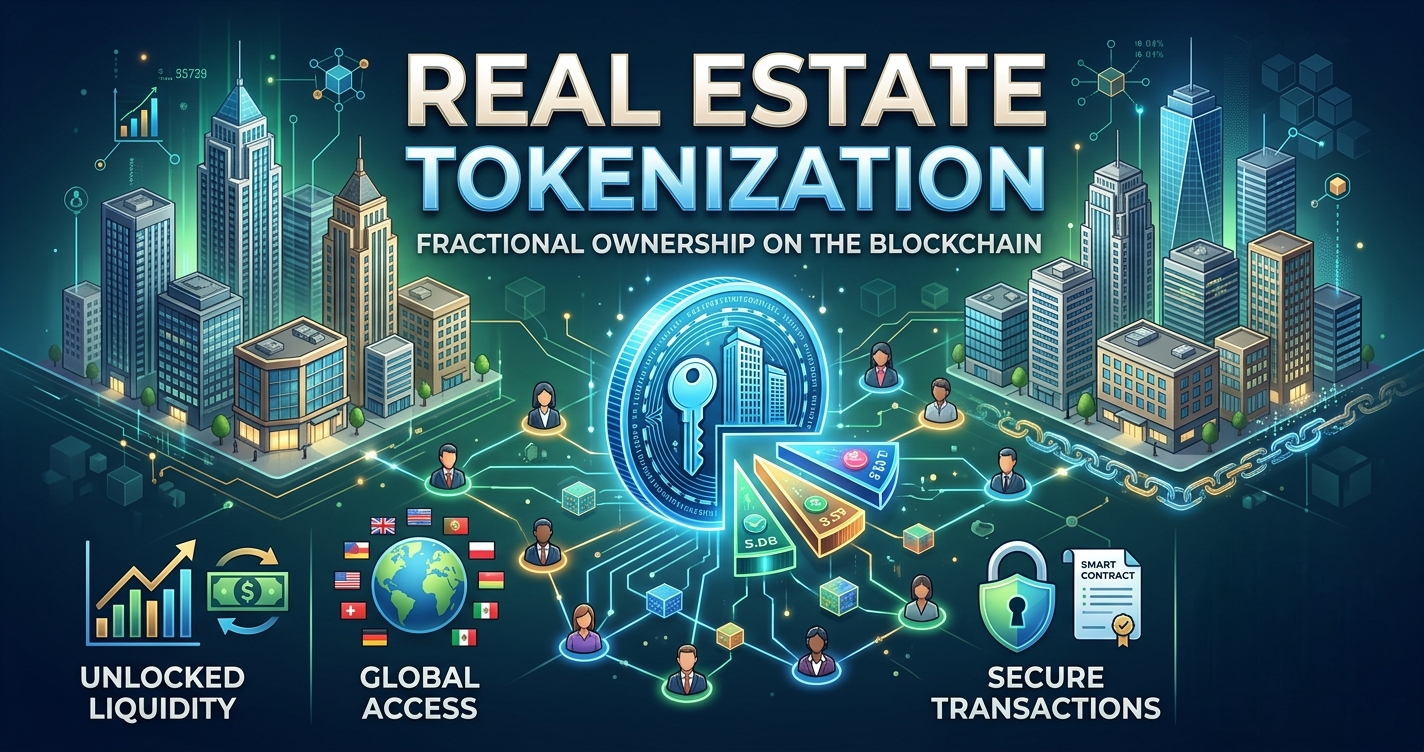
Real estate has traditionally been one of the most reliable ways to build wealth, but it has also been one of the least accessible asset classes. Buying property usually requires significant capital, long documentation processes, bank involvement, legal verification, and ongoing management. For many investors, especially smaller or first-time investors, direct property ownership can feel out of reach. Real estate tokenization is changing this long-standing model by using blockchain technology to divide property ownership or economic rights into digital tokens.
At its simplest, real estate tokenization converts the value of a property or property-backed investment into blockchain-based tokens. These tokens may represent fractional ownership, rental income rights, equity in a property-holding entity, debt interests, or shares in a real estate fund. Instead of one buyer purchasing an entire building, many investors can own smaller digital units linked to the asset. This shift is transforming property ownership from a rigid, high-cost model into a more flexible, digital, and accessible investment structure.
The momentum behind tokenization is growing because real estate is a massive but highly illiquid market. Deloitte predicts that tokenized real estate could grow from less than US$0.3 trillion in 2024 to US$4 trillion by 2035, with a projected compound annual growth rate of 27%. McKinsey also estimates that tokenized market capitalization across asset classes could reach about US$2 trillion by 2030, excluding cryptocurrencies and stablecoins, with an optimistic scenario of about US$4 trillion. These projections show why businesses, investors, developers, and financial institutions are paying close attention to blockchain-based property ownership models.
What Is Real Estate Tokenization and Why Does It Matter?
Real Estate Tokenization is the process of digitally representing ownership rights, income rights, or financial interests in a property through blockchain-based tokens. These tokens are usually created through smart contracts, which are self-executing programs that define how tokens are issued, transferred, restricted, redeemed, or used to distribute income.
A Real Estate Tokenization company helps property owners, startups, enterprises, and investment platforms create the complete infrastructure needed to tokenize real estate assets. This usually includes legal structuring, smart contract development, investor onboarding, KYC/AML integration, digital wallet support, admin dashboards, income distribution systems, and secondary marketplace features. The role of such a company is not only technical; it must also support a practical bridge between blockchain-based ownership and legally enforceable real-world property rights.
For example, a commercial property owner may want to raise funds without selling the entire building. Through tokenization, the property can be placed into a legal structure, and tokens can be issued to represent proportional economic interests in that asset. Investors who buy the tokens may receive rental income, appreciation benefits, or other rights depending on the structure.
How Tokenization Changes the Meaning of Property Ownership
Traditional property ownership is usually binary: a person or company either owns a property, co-owns it through a legal agreement, or invests indirectly through funds or trusts. Tokenization introduces a more flexible ownership model. It allows real estate value to be divided into smaller digital units, making ownership more modular and programmable.
This does not mean that the physical property itself exists on the blockchain. The building, land, title deed, lease agreements, and property management remain in the real world. What blockchain changes is the way economic interests and ownership records are represented, transferred, and managed. Recent research on real-world asset tokenization notes that most RWA systems use hybrid architectures, where blockchain supports token representation and transfer control, while legal claims, custody, compliance, and verification remain anchored off-chain.
This hybrid model is important because it keeps tokenized property connected to legal reality. A token must represent a real, enforceable claim. Without legal structuring, a token would simply be a digital entry with little practical value. When properly developed, however, tokenization can make property ownership more transparent, divisible, and easier to manage.
Fractional Ownership: Making Real Estate More Accessible
One of the biggest ways tokenization is transforming property ownership is through fractional ownership. In traditional real estate, investors often need large amounts of capital to buy property or participate in high-quality commercial deals. Tokenization can lower this barrier by dividing a property-backed investment into smaller token units.
For instance, a commercial office building worth millions of dollars could be tokenized into thousands or even millions of digital tokens. Each token may represent a fraction of the economic interest in the property. This allows more investors to participate at smaller ticket sizes, depending on the platform’s legal and regulatory structure.
Fractional ownership can be especially valuable in high-demand real estate segments such as commercial buildings, luxury residential properties, rental apartments, warehouses, hospitality properties, and real estate funds. Investors who could not afford to buy an entire property may still gain exposure to property-backed returns.
For property owners and developers, fractional tokenization creates new capital-raising opportunities. Instead of relying only on banks, institutional investors, or full asset sales, they can potentially raise funds from a wider investor base. This can be particularly useful for projects that need flexible financing or want to unlock value from income-generating assets.
Liquidity Potential in an Illiquid Market
Real estate is valuable, but it is not easy to sell quickly. A traditional property sale can take weeks or months, involving agents, legal checks, inspections, negotiations, financing, and title transfers. Tokenization aims to improve this by allowing tokenized property interests to be transferred digitally through compliant platforms.
However, it is important to be realistic. Tokenization creates the infrastructure for improved liquidity, but it does not automatically guarantee active trading. Liquidity depends on investor demand, regulatory permission, marketplace access, trust in the underlying asset, and the quality of platform design. A 2026 study on tokenized real-world asset markets found that tokenization and liquidity should be treated as separate outcomes, because asset value alone does not reliably predict trading activity.
This is an important point for investors and businesses. Tokenization can reduce friction, but real liquidity requires a strong ecosystem. Platforms need verified investors, transparent reporting, compliant trading rules, and enough buyers and sellers. When these elements are in place, tokenized property interests may become easier to transfer than traditional real estate shares or private ownership agreements.
Transparency and Trust Through Blockchain Records
Property ownership depends heavily on trust. Investors need to know who owns what, how income is distributed, whether documents are accurate, and whether records can be manipulated. Blockchain can improve transparency by creating tamper-resistant ownership and transaction records.
In a tokenized real estate platform, investors may be able to view token supply, ownership history, transaction records, and distribution activity. Smart contracts can automate certain processes, reducing the need for manual updates. For example, if rental income is distributed to token holders, a smart contract can calculate proportional payments based on token ownership.
Still, blockchain transparency must be supported by reliable off-chain reporting. Investors also need access to property valuation reports, lease agreements, rental performance, maintenance updates, insurance details, legal documents, and audit information. A blockchain record can show token movement, but it cannot independently prove that a building is well managed or that tenants are paying rent. This is why strong governance and asset management remain essential.
Smart Contracts and Automated Property Management
Smart contracts are one of the most important technologies behind real estate tokenization. They can automate key functions such as token issuance, ownership transfers, income distribution, investor whitelisting, redemption, and compliance restrictions.
For example, if a tokenized property generates rental income every month, the platform can distribute that income to eligible token holders based on predefined rules. If a token can only be held by verified investors, the smart contract can restrict transfers to approved wallet addresses. If a jurisdiction requires ownership limits, the contract can enforce those rules automatically.
This automation can reduce administrative workload and improve accuracy. In traditional property investment structures, income distribution and ownership updates may involve manual recordkeeping, bank transfers, spreadsheets, and intermediaries. Tokenization can streamline these processes and create a more efficient ownership experience.
However, smart contracts must be carefully developed and audited. A coding error can create serious financial and legal problems. Businesses developing tokenized real estate platforms must prioritize security audits, access control, upgrade mechanisms, emergency controls, and compliance testing before launch.
Real-World Use Cases of Tokenized Property Ownership
Real estate tokenization can be applied across several property ownership models. One common use case is commercial real estate tokenization. Office buildings, retail centers, warehouses, and mixed-use developments can be tokenized to allow fractional investor participation. Investors may receive income based on rent or property performance, depending on the legal structure.
Residential real estate tokenization is another growing use case. Rental apartments, vacation homes, and housing portfolios can be converted into tokenized investment products. This can help investors access residential property markets without directly purchasing or managing homes.
Tokenized real estate funds are also gaining attention. Instead of tokenizing one property, a fund can tokenize shares or units linked to a diversified portfolio of properties. Deloitte identifies tokenized private real estate funds as an important opportunity within the future tokenized real estate ecosystem.
Other use cases include hospitality assets, student housing, industrial parks, land development projects, and real estate-backed debt. RWA.xyz’s tokenized real estate dashboard showed total tokenized real estate value of about US$438.88 million across 64 assets as of July 8, 2026, reflecting an early but developing market segment.
Regulatory and Legal Considerations
Real estate tokenization cannot succeed without legal clarity. In many cases, tokenized property interests may be treated as securities because investors expect financial returns from the efforts of a property owner, manager, or platform operator. This means issuers may need to comply with securities laws, investor eligibility rules, disclosure requirements, transfer restrictions, and jurisdiction-specific regulations.
Legal structuring determines what the token actually represents. It may represent equity in a special purpose vehicle, debt rights, fund units, revenue-sharing rights, or another legally defined interest. This structure must be clearly documented so investors understand their rights, risks, and limitations.
Compliance systems are also necessary. Platforms often need KYC and AML verification, investor accreditation checks, geographic restrictions, tax reporting, and transaction monitoring. These features protect both the issuer and the investor while helping the platform operate within regulatory boundaries.
Challenges in Transforming Property Ownership
While real estate tokenization is promising, it is not a perfect solution. The biggest challenge is connecting blockchain tokens with enforceable real-world rights. A token is only valuable if the legal documents, asset custody, title records, and property management systems behind it are reliable.
Another challenge is valuation. Real estate prices can change due to market conditions, interest rates, location trends, rental demand, and maintenance costs. Tokenized investors need transparent valuation updates and realistic performance reporting.
Liquidity is also a challenge. A tokenized property may still have limited buyers if the market is new, the asset is unattractive, or the regulatory structure restricts transfers. Investors should understand that tokenization improves transferability but does not eliminate market risk.
Finally, there is the issue of trust. Investors must trust the platform operator, asset manager, custodian, legal structure, and technology provider. For this reason, successful tokenized real estate platforms must combine strong blockchain infrastructure with credible real estate expertise.
The Future of Property Ownership
Real estate tokenization could gradually reshape how people invest in, manage, and transfer property interests. In the future, property ownership may become more digital, fractional, and globally accessible. Investors may be able to build diversified real estate portfolios with smaller investment amounts, while property owners may access new funding channels.
The transformation will likely happen in stages. First, tokenized real estate funds and income-generating commercial assets may see wider adoption. Over time, better regulations, stronger secondary markets, institutional participation, and improved investor education may help tokenized property ownership become more mainstream.
The most successful platforms will not simply create tokens. They will solve real problems in property investment: high entry barriers, slow settlement, limited transparency, inefficient income distribution, and restricted liquidity. Businesses that combine legal compliance, secure smart contracts, investor-friendly design, and reliable asset management will be best positioned to lead this shift.
Conclusion
Real estate tokenization is transforming property ownership by making real estate assets more accessible, fractional, transparent, and digitally manageable. It gives investors new ways to participate in property-backed opportunities and gives property owners new methods to raise capital and unlock asset value. However, successful tokenization requires strong legal structuring, secure smart contracts, regulatory compliance, accurate valuation, and trustworthy asset management. For businesses looking to build scalable and compliant tokenized real estate platforms, Blockchain App Factory provides the best services with end-to-end support for platform development, token creation, investor onboarding, smart contract integration, and launch execution.
FAQs
1. What is real estate tokenization?
Real estate tokenization is the process of converting ownership rights or economic interests in a property into blockchain-based digital tokens. These tokens may represent fractional ownership, rental income rights, fund units, or other legally structured property-backed interests.
2. How does real estate tokenization transform property ownership?
It transforms ownership by making real estate more fractional, digital, transparent, and transferable. Instead of requiring large capital to buy an entire property, investors can hold smaller tokenized interests linked to real estate assets.
3. Is tokenized real estate legally valid?
Tokenized real estate can be legally valid when it is properly structured under applicable property, securities, tax, and financial regulations. The token must be connected to enforceable legal rights and supported by clear documentation.
4. Does real estate tokenization guarantee liquidity?
No. Tokenization can improve the potential for liquidity by enabling digital transfer of property-backed interests, but actual liquidity depends on investor demand, marketplace access, compliance rules, and trust in the asset.
5. Why should businesses work with a real estate tokenization development company?
A professional development company can help build the technical and compliance infrastructure needed for tokenized property platforms, including smart contracts, KYC/AML systems, investor dashboards, wallet integration, admin panels, and secondary marketplace features.
- Business
- Technology
- Finance
- Health
- Fashion
- Lifestyle
- Travel
- Food
- Education
- Real Estate
- Automobile
- Entertainment
- Sports
- Pets
- Home Decor
- Gardening
- Parenting
- Wedding
- Beauty
- Gaming
- Photography
- Music
- Movies
- News
- Politics
- Religion
- Astrology
- Law
- Insurance
- Jobs
- Freelancing
- Remote Work
- Blogging
- E-commerce
- WordPress
- OpenCart
- Social Media
- Graphic Design
- Web Design
- Programming
- Mobile Apps
- Artificial Intelligence
- SaaS
- Cyber Security
- Cloud Computing
- Hosting
- SEO
- Content Writing
- Email Marketing
- Affiliate Marketing
- YouTube
- Podcasting
- Interior Design
- DIY
- Crafts
- Art
- Architecture
- Environment
- Agriculture
- Animals
- Fishing
- Hunting
- Survival
- Outdoor
- Fitness
- Yoga
- Meditation
- Mental Health
- Skin Care
- Hair Care
- Makeup
- Jewelry
- Sarees
- Salwar Kameez
- Lehenga Choli
- Kurtis
- Men Fashion
- Women Fashion
- Kids Fashion
- Footwear
- Bags
- Watches
- Luxury
- Shopping
- Coupons
- Electronics
- Smartphones
- Laptops
- Tablets
- Cameras
- Home Appliances
- Kitchen
- Furniture
- Cleaning
- Baby Care
- Senior Care
- Relationships
- Self Improvement
- Motivation
- Quotes
- Festivals
- Events
- Careers
- Remote Work
- Productivity
- Wholesale
- Manufacturing
- Import Export
- Logistics
- Supply Chain
- Human Resources
- Customer Service
