
How to Choose the Right Lawyer for Your Legal Matter in Australia
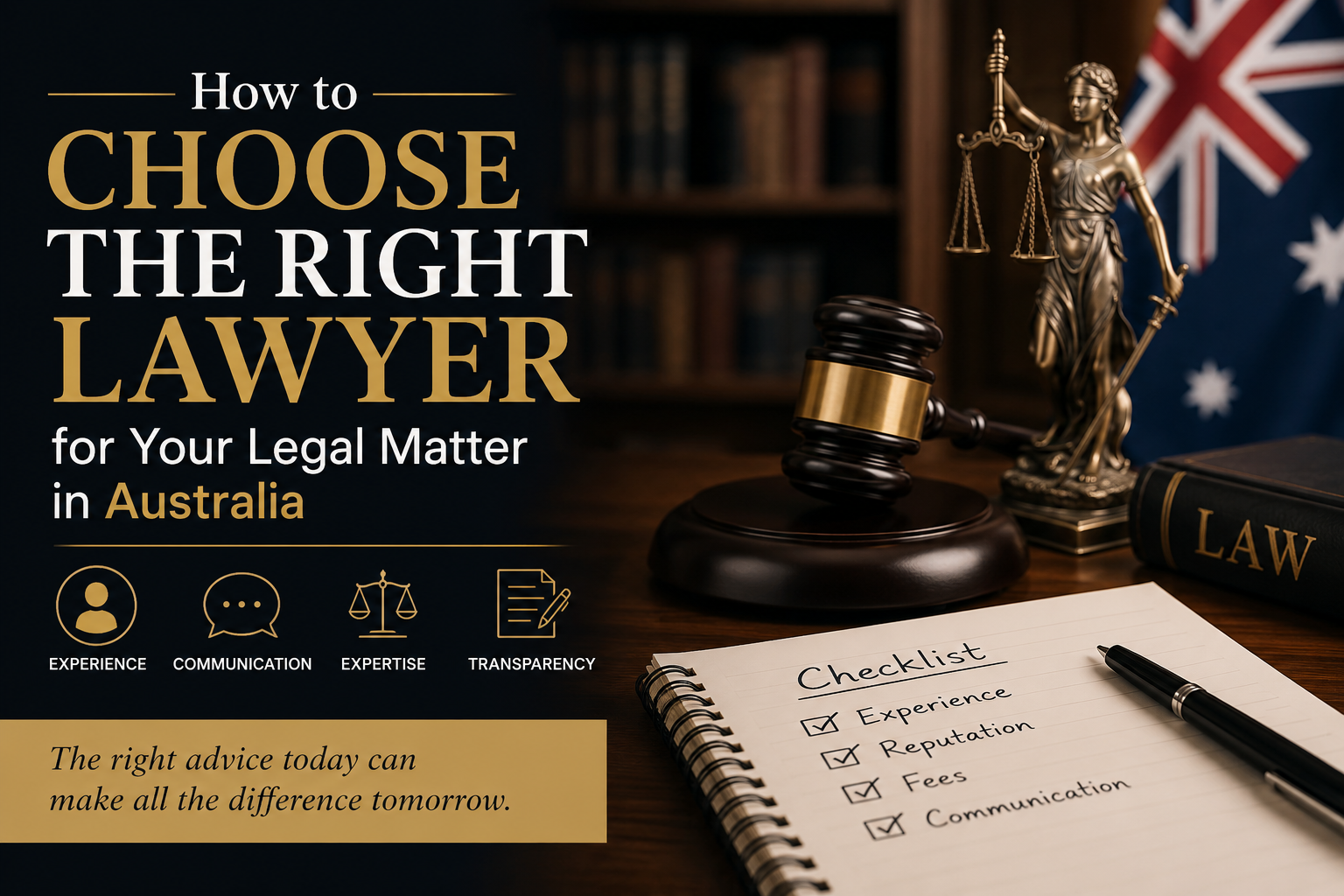
Legal problems rarely arrive with a warning. A marriage may end, a business dispute may surface, or a criminal charge may land unexpectedly, and suddenly the search for the right legal representative becomes urgent. Australia has thousands of registered legal practitioners, and the sheer number of options can make the selection process overwhelming. Choosing the wrong lawyer can cost time, money, and, in serious cases, personal freedom or family stability. This guide breaks down the practical steps involved in finding a lawyer who is genuinely suited to a specific legal matter.
Why the Right Lawyer Matters
Legal outcomes are rarely decided by luck. They depend on preparation, experience, and how well a lawyer understands the specific area of law involved. A property lawyer, for instance, may not be equipped to handle a custody dispute, and a general practitioner may lack the courtroom experience needed for a serious criminal charge. Matching the lawyer's expertise to the legal issue at hand is the single most important factor in the entire selection process.
Step 1: Identify the Type of Legal Matter
Before searching for a lawyer, it helps to clearly define the nature of the problem. Australian law is divided into several practice areas, and lawyers typically specialise in one or two of them rather than practising broadly across all fields.
Some common categories include:
-
Family law (divorce, custody, property settlement)
-
Criminal law (charges, bail applications, court representation)
-
Property and conveyancing law
-
Employment law
-
Wills and estate planning
-
Business and commercial law
For example, someone going through a separation would typically search for a Family Lawyer Melbourne, while someone facing charges would need a Criminal Lawyer Melbourne with courtroom experience relevant to the specific offence.
Step 2: Check Qualifications and Registration
Every practising lawyer in Australia must hold a current practising certificate issued by the relevant state or territory Legal Services Board or Law Society. This certificate confirms that the lawyer is legally permitted to represent clients and has met ongoing professional development requirements. It is reasonable, and encouraged, to ask a prospective lawyer for their registration details or verify them through the relevant state law society's public register.
Step 3: Evaluate Experience in the Specific Area
Years in practice matter, but relevant experience matters more. A lawyer who has handled hundreds of property settlements will likely navigate a family law case more efficiently than one who occasionally takes on family matters alongside other work. When researching options, it is useful to ask:
-
How many similar cases has the lawyer handled?
-
What was the general outcome of those cases?
-
Does the lawyer regularly appear in the relevant court (Family Court, Magistrates' Court, etc.)?
Step 4: Understand the Fee Structure
Legal fees in Australia vary significantly depending on the complexity of the matter, the lawyer's seniority, and the region. Some lawyers charge a fixed fee for simpler matters, while others bill hourly. Before engagement, a written cost agreement should outline all charges, including consultation fees, court appearance costs, and administrative charges.
The table below summarises the general approach to selecting lawyers for two common legal needs in Melbourne.
|
Factor |
Family Lawyer Melbourne |
Criminal Lawyer Melbourne |
|
Typical Matters Handled |
Divorce, child custody, property settlement, spousal maintenance |
Criminal charges, bail applications, court hearings, appeals |
|
Key Court Involved |
Federal Circuit and Family Court of Australia |
Magistrates' Court, County Court, Supreme Court of Victoria |
|
Fee Structure |
Fixed fee or hourly, often with initial consultation charge |
Hourly or case-based, may vary with case severity |
|
Experience to Look For |
Mediation and negotiation skills, family dispute resolution experience |
Courtroom advocacy, plea negotiation, trial experience |
|
Common Client Concern |
Fair division of assets and parenting arrangements |
Protecting legal rights and minimising penalties |
|
Average Timeframe |
Weeks to several months depending on complexity |
Days to several months depending on charge severity |
Step 5: Assess Communication Style
Legal matters often involve sensitive personal information, and a good working relationship depends on clear, respectful communication. During an initial consultation, it is worth noting whether the lawyer listens carefully, explains legal terms in plain language, and responds to questions without rushing. A lawyer who communicates clearly from the outset is more likely to keep clients informed throughout the process.
Step 6: Read Reviews and Ask for References
Client testimonials, online reviews, and professional references offer insight into how a lawyer handles real cases. While reviews should not be the sole deciding factor, consistent patterns, whether positive or negative, often reflect genuine client experiences. Speaking with previous clients, where possible, can provide additional clarity.
Step 7: Consider Location and Accessibility
While video consultations have become more common, many legal matters still require in-person meetings, court appearances, or document signing. Choosing a lawyer based locally, such as within Melbourne for Victorian matters, often simplifies logistics and ensures familiarity with local court procedures and judicial officers.
Step 8: Trust the Initial Consultation
Most law firms offer an initial consultation, either free or at a reduced rate, to discuss the case. This meeting is an opportunity to evaluate not just legal expertise but also compatibility. A lawyer who takes time to understand the situation, asks relevant questions, and provides a realistic assessment of possible outcomes is generally a stronger choice than one who makes broad promises without reviewing the details.
Common Mistakes to Avoid
-
Choosing a lawyer based solely on advertising or low fees
-
Failing to verify registration and disciplinary history
-
Ignoring communication style during the consultation
-
Not asking about total costs upfront
-
Overlooking the lawyer's specific experience in the relevant legal area
Final Thoughts
Selecting the right lawyer is not about finding the most well-known name but about identifying the professional best equipped to handle a specific legal matter. Whether the situation calls for a Family Lawyer Melbourne to manage a sensitive separation or a Criminal Lawyer Melbourne to provide strong courtroom defence, the process should involve careful research, verification of credentials, and an honest assessment of communication and experience. Taking the time to choose wisely at the outset often makes a significant difference in how smoothly the legal process unfolds.
- Business
- Technology
- Finance
- Health
- Fashion
- Lifestyle
- Travel
- Food
- Education
- Real Estate
- Automobile
- Entertainment
- Sports
- Pets
- Home Decor
- Gardening
- Parenting
- Wedding
- Beauty
- Gaming
- Photography
- Music
- Movies
- News
- Politics
- Religion
- Astrology
- Law
- Insurance
- Jobs
- Freelancing
- Remote Work
- Blogging
- E-commerce
- WordPress
- OpenCart
- Social Media
- Graphic Design
- Web Design
- Programming
- Mobile Apps
- Artificial Intelligence
- SaaS
- Cyber Security
- Cloud Computing
- Hosting
- SEO
- Content Writing
- Email Marketing
- Affiliate Marketing
- YouTube
- Podcasting
- Interior Design
- DIY
- Crafts
- Art
- Architecture
- Environment
- Agriculture
- Animals
- Fishing
- Hunting
- Survival
- Outdoor
- Fitness
- Yoga
- Meditation
- Mental Health
- Skin Care
- Hair Care
- Makeup
- Jewelry
- Sarees
- Salwar Kameez
- Lehenga Choli
- Kurtis
- Men Fashion
- Women Fashion
- Kids Fashion
- Footwear
- Bags
- Watches
- Luxury
- Shopping
- Coupons
- Electronics
- Smartphones
- Laptops
- Tablets
- Cameras
- Home Appliances
- Kitchen
- Furniture
- Cleaning
- Baby Care
- Senior Care
- Relationships
- Self Improvement
- Motivation
- Quotes
- Festivals
- Events
- Careers
- Remote Work
- Productivity
- Wholesale
- Manufacturing
- Import Export
- Logistics
- Supply Chain
- Human Resources
- Customer Service
