
Step-by-Step Guide to Content Marketing Lead Generation
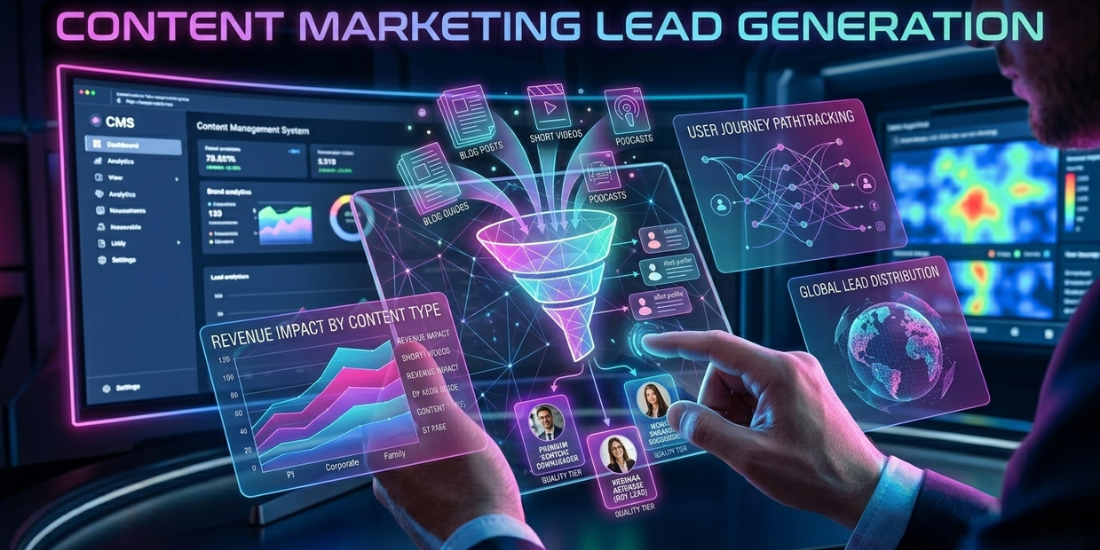
If you’ve ever tried content marketing lead generation and thought, “why am I getting traffic but no leads?”, you’re not alone. That’s honestly the most common problem people face. They publish blogs, maybe rank a few pages, get some clicks but nothing really turns into business. The missing piece is usually not content itself, it's how that content is connected to lead generation. Because content alone doesn’t bring customers. Structured content does. This guide is basically a breakdown of how to actually use content marketing to generate real leads, not just pageviews.
What content marketing lead generation really means
At a simple level, it just means using helpful content to attract people and turning some of them into potential customers.
Nothing fancy.
Someone reads your blog, finds it useful, starts trusting you a bit, and then eventually gives you their email, fills a form, or contacts you. That’s a lead.
But in reality, most people skip the “trust” part. They just publish content and expect leads to appear. That’s why it doesn’t work.
Content marketing only generates leads when there’s a path built between information and action.
Why content actually works for lead generation
People don’t really trust ads anymore the way they used to. Before buying anything, they search, compare, read reviews, and try to understand what they’re getting into.
That behavior is exactly where content fits in.
When someone finds your article through Google or social media, they’re not being interrupted, they're already looking for answers. That makes them way easier to convert later.
And the biggest advantage is simple: good content keeps working for you even when you’re not actively promoting it.
One blog can bring leads for months or even years if it’s done properly.
Understanding who you’re actually writing for
This is where most strategies fall apart.
People often start writing before they even know who they’re talking to. That’s why the content feels generic and doesn’t convert.
You need a clear picture of your audience, not just age or industry, but actual behavior.
What are they struggling with right now? What’s confusing them? What are they searching late at night when they’re stuck?
Once you know that, your content stops being random and starts feeling like it’s answering real questions.
Keyword research is not just SEO work
A lot of people treat keyword research like a technical SEO task, but it’s really just understanding what people are thinking.
And more importantly, why they’re searching.
Some keywords show curiosity, some show comparison, and some show clear buying intent. For lead generation, that intent part matters a lot more than volume.
Someone searching “what is content marketing” is just learning.
Someone searching “how to get leads from content marketing” is already much closer to becoming a customer.
That difference decides everything.
Building a content flow instead of random posts
Most websites fail because their content is scattered.
There’s no direction, no journey, just random blogs published whenever.
A better way to think about it is simple: people move in stages.
First they discover a problem, then they explore solutions, and finally they decide what to do.
Your content should quietly guide them through that process instead of treating every visitor the same.
When that structure is missing, even good content doesn’t convert properly.
Turning content into actual leads
This is the part where things either start working or completely fall apart.
Because getting traffic is easy compared to getting leads.
To turn readers into leads, you need something that feels worth exchanging contact details for. Nobody gives their email for nothing anymore.
So usually it comes down to small but intentional things placed inside content:
-
Something useful they can download or use immediately
-
A simple email signup that doesn’t feel forced
-
A landing page that focuses on one clear offer
-
A call-to-action that feels natural in context
-
A form that doesn’t ask for too much information
The key is not being aggressive. It’s about timing and relevance.
Getting people to actually see your content
Even the best content is useless if no one sees it.
That’s why distribution matters just as much as writing.
Search engines bring long-term traffic, especially when your content matches what people are actively searching for. Social media helps with faster reach. Email keeps your audience warm. And backlinks help everything perform better in search.
The truth is, most people underestimate consistency here. They publish a few posts, don’t see immediate results, and stop.
But content compounds. Slowly, then suddenly.
What happens after someone becomes a lead
Getting a lead is not the final goal, it's just the start of another phase.
Most people don’t buy immediately. They need time, reminders, and reassurance.
That’s where nurturing comes in. You stay in touch, share helpful content, and slowly build trust until they’re ready to take action.
Sometimes that’s through email. Sometimes through retargeting. Sometimes just by showing up consistently.
If you disappear after capturing a lead, you lose most of them.
Tracking what’s actually working
This part is boring but important.
You need to know what content is actually doing something and what’s just sitting there.
Look at which pages bring traffic, which ones convert, and which ones don’t do anything at all. That tells you where to focus next.
Small improvements can change results a lot, sometimes just changing a headline or CTA can double conversions.
Common mistakes people make
Most content strategies don’t fail because of complexity. They fail because of simple mistakes repeated over time.
People target everyone instead of a specific audience. They ignore search intent. They publish without any real goal. Or they expect instant results and quit too early.
Content marketing is slow at the start, but it builds momentum if you stay consistent.
Final thoughts
Content marketing lead generation isn’t about doing more, it's about doing it with direction.
Once you understand your audience, create content around real intent, and give people a clear next step, leads stop feeling random.
It takes time, but once it starts working, it becomes one of the most stable ways to grow online.
What is content marketing lead generation?
It means using helpful content to attract people and turn them into potential customers.
How does content marketing generate leads?
By answering real questions, building trust, and guiding people toward taking action.
What type of content works best?
Guides, blog posts, case studies, and anything that solves a real problem.
How long does it take to see results?
Usually a few months, depending on consistency and competition.
Is SEO necessary?
Yes, because most long-term leads come from search traffic.
- Business
- Technology
- Finance
- Health
- Fashion
- Lifestyle
- Travel
- Food
- Education
- Real Estate
- Automobile
- Entertainment
- Sports
- Pets
- Home Decor
- Gardening
- Parenting
- Wedding
- Beauty
- Gaming
- Photography
- Music
- Movies
- News
- Politics
- Religion
- Astrology
- Law
- Insurance
- Jobs
- Freelancing
- Remote Work
- Blogging
- E-commerce
- WordPress
- OpenCart
- Social Media
- Graphic Design
- Web Design
- Programming
- Mobile Apps
- Artificial Intelligence
- SaaS
- Cyber Security
- Cloud Computing
- Hosting
- SEO
- Content Writing
- Email Marketing
- Affiliate Marketing
- YouTube
- Podcasting
- Interior Design
- DIY
- Crafts
- Art
- Architecture
- Environment
- Agriculture
- Animals
- Fishing
- Hunting
- Survival
- Outdoor
- Fitness
- Yoga
- Meditation
- Mental Health
- Skin Care
- Hair Care
- Makeup
- Jewelry
- Sarees
- Salwar Kameez
- Lehenga Choli
- Kurtis
- Men Fashion
- Women Fashion
- Kids Fashion
- Footwear
- Bags
- Watches
- Luxury
- Shopping
- Coupons
- Electronics
- Smartphones
- Laptops
- Tablets
- Cameras
- Home Appliances
- Kitchen
- Furniture
- Cleaning
- Baby Care
- Senior Care
- Relationships
- Self Improvement
- Motivation
- Quotes
- Festivals
- Events
- Careers
- Remote Work
- Productivity
- Wholesale
- Manufacturing
- Import Export
- Logistics
- Supply Chain
- Human Resources
- Customer Service
