Businesses generate and collect more information than ever. From customer records and emails to system logs, documents, backups, and multimedia files, data continues to accumulate across cloud platforms, servers, applications, and employee devices.
While this information can support operations and decision-making, storing everything indefinitely can become expensive. Organizations may end up paying for data that is rarely accessed, duplicated, outdated, or no longer has business value.
This is where information lifecycle management (ILM) becomes important. By defining how information should be created, classified, stored, archived, retained, and eventually disposed of, businesses can control data growth and make better use of their storage infrastructure.
What Is Information Lifecycle Management?
Information lifecycle management is a structured approach to managing data throughout its useful life. Instead of treating every piece of information the same way, ILM assigns data different management policies based on factors such as business value, access frequency, sensitivity, and regulatory requirements.
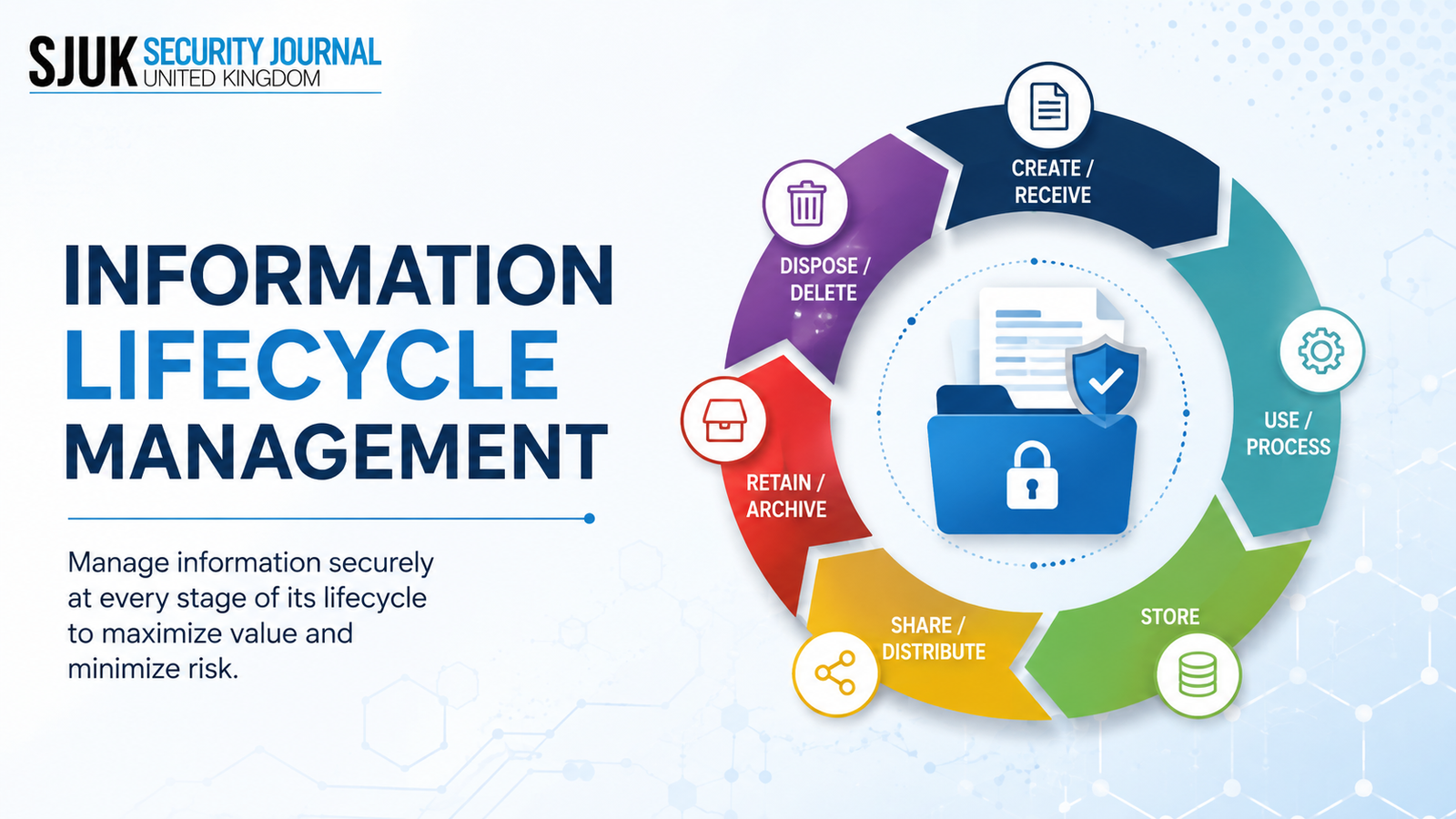
A typical information lifecycle includes:
- Data creation: Information is generated through business applications, transactions, communications, and other activities.
- Active use: Frequently accessed information remains on high-performance storage.
- Classification: Data is categorized according to its importance, sensitivity, and purpose.
- Retention: Information is kept for as long as it is required for operational, legal, or regulatory reasons.
- Archiving: Inactive but potentially valuable information is moved to lower-cost storage.
- Secure disposal: Data that has reached the end of its retention period is securely deleted or destroyed.
The objective is not simply to store less data. It is to ensure that businesses spend their storage budget on information that actually needs to be retained and readily available.
Why Unmanaged Data Increases Storage Costs
Without a defined lifecycle strategy, data can accumulate rapidly. The problem becomes particularly significant when organizations operate across multiple cloud environments, on-premises systems, SaaS platforms, and backup repositories.
Duplicate and Redundant Data
Organizations often maintain multiple copies of the same information. Documents may exist on individual devices, shared drives, cloud storage, email systems, and backup environments.
Although redundancy can be necessary for resilience, uncontrolled duplication consumes storage capacity and increases backup and management requirements.
Outdated and Low-Value Information
Not every file remains useful forever. Old project documents, obsolete reports, temporary files, outdated logs, and inactive records can occupy storage for years if nobody has established rules for reviewing them.
Keeping such information indefinitely creates unnecessary storage consumption.
Over-Retention of Data
Another common problem is retaining information simply because there is no process for deciding when it should be archived or deleted.
Long-term retention can increase storage and backup costs while also creating additional security and compliance exposure. Data should generally have a defined business or regulatory reason for being retained.
Growth of Unstructured Data
Emails, presentations, PDFs, images, videos, collaboration files, and system-generated logs represent a significant portion of modern enterprise data.
Because unstructured information is harder to classify and manage consistently, organizations can easily accumulate large volumes without realizing how much storage they are consuming.
How Information Lifecycle Management Reduces Data Storage Costs
A properly designed ILM strategy can reduce unnecessary storage consumption through several mechanisms.
1. Classifying Data by Business Value
The first step is understanding what information an organization actually has.
Data can be classified according to factors such as:
- Business importance
- Access frequency
- Sensitivity
- Legal requirements
- Regulatory obligations
- Retention requirements
- Operational value
Frequently accessed business-critical information may require high-performance storage, while inactive information may not.
This classification allows organizations to avoid applying expensive storage requirements to every type of data.
2. Moving Inactive Data to Lower-Cost Storage
One of the most direct ways ILM reduces costs is through storage tiering.
Frequently accessed information can remain on high-performance infrastructure, while older or less frequently accessed data can be transferred to lower-cost storage tiers.
For example, an organization might keep current customer records in primary storage while moving older records that still need to be retained into an archival environment.
This approach allows businesses to maintain access to required information without paying premium storage costs for every dataset.
3. Automating Data Retention Policies
Manual data management becomes difficult as data volumes grow.
Automated retention policies can determine how long specific categories of information should remain in particular storage environments. Once information becomes inactive, the system can trigger predefined actions such as migration, archiving, or deletion.
Automation reduces the likelihood that employees forget to review old information and helps prevent unnecessary data from remaining in expensive storage indefinitely.
4. Eliminating Unnecessary Duplicates
Data deduplication can identify and eliminate redundant copies where appropriate.
This can be particularly valuable for large backup environments, file repositories, and other systems where identical information may be stored repeatedly.
Reducing duplication means fewer gigabytes or terabytes need to be stored, backed up, replicated, and managed.
5. Securely Deleting Expired Information
Deletion is an important part of the information lifecycle.
When information has reached the end of its approved retention period and no legal, regulatory, or operational requirement requires further preservation, it can be securely disposed of according to organizational policies.
This prevents expired information from continuing to consume storage resources.
However, organizations should avoid indiscriminate deletion. Retention and disposal policies need to account for legal holds, regulatory requirements, contractual obligations, and business needs.
Information Lifecycle Management and Cloud Storage Optimization
Moving to the cloud does not automatically solve data storage costs.
Cloud platforms make it easy to scale storage, but that convenience can encourage organizations to retain information indefinitely. As datasets grow, storage, backup, replication, and data-management expenses can increase.
ILM can help organizations create policies for cloud data based on access patterns and retention requirements.
For example, frequently accessed data can remain in an appropriate active storage tier, while older information can be automatically moved to archival storage. Data that no longer has a legitimate retention requirement can eventually be removed.
This creates a more controlled approach to cloud storage instead of allowing data volumes to grow without defined limits.
The Role of Automation in Information Lifecycle Management
Automation is becoming increasingly important as organizations manage larger and more distributed datasets.
Modern ILM processes can automate tasks such as:
- Data classification and tagging
- Storage tiering
- Retention enforcement
- Archiving
- Duplicate detection
- Policy monitoring
- Secure deletion
- Compliance reporting
AI can also assist with identifying patterns in unstructured information and helping organizations categorize data more efficiently. However, automated systems should operate within clearly defined governance rules, particularly when handling sensitive or regulated information.
How to Build a Cost-Effective Information Lifecycle Management Strategy
Businesses do not need to redesign their entire storage environment immediately. A practical approach can begin with a data audit.
Step 1: Audit Existing Data
Identify where information is stored and determine how much storage each environment consumes.
Include:
- File servers
- Cloud storage
- Databases
- Email platforms
- Backup systems
- Collaboration platforms
- Employee devices
Step 2: Classify Information
Group information according to its value, sensitivity, access frequency, and retention requirements.
This provides the foundation for assigning appropriate storage and lifecycle policies.
Step 3: Define Retention Rules
Establish how long different categories of information need to be retained.
Retention periods should reflect business requirements and applicable legal or regulatory obligations rather than arbitrary timelines.
Step 4: Introduce Storage Tiering
Determine which data belongs in high-performance storage and which information can be moved to more economical archival environments.
Step 5: Automate Lifecycle Actions
Where appropriate, automate migration, archiving, retention enforcement, and deletion.
Automation makes lifecycle policies more consistent and reduces dependence on manual intervention.
Step 6: Monitor and Review
Data environments change continuously. Organizations should regularly review storage consumption, retention policies, access patterns, and associated costs.
An ILM strategy should evolve as business requirements and technology change.
Information Lifecycle Management vs. Simply Deleting Old Data
ILM should not be confused with simply removing old files.
Deleting information without understanding its purpose or retention requirements can create serious problems. Some records may need to be preserved for legal, regulatory, contractual, or operational reasons.
The goal of ILM is controlled data management, not aggressive data deletion.
A mature strategy determines what should remain readily accessible, what should be archived, how long information should be retained, and when it can be securely disposed of.
Benefits Beyond Lower Storage Costs
Cost reduction is one of the most visible advantages of ILM, but it is not the only benefit.
A well-designed lifecycle strategy can also help organizations achieve:
- Improved data governance: Clear rules define how information should be managed.
- Better compliance: Retention and disposal policies can support regulatory requirements.
- Reduced security exposure: Organizations can reduce the amount of unnecessary information they hold.
- Faster data discovery: Proper classification makes relevant information easier to locate.
- More efficient backups: Removing unnecessary data can reduce backup volumes.
- Improved infrastructure performance: Lower data volumes can reduce pressure on storage environments.
- Greater visibility: Organizations gain a clearer understanding of where their information resides and how it is being used.
How to Measure the ROI of Information Lifecycle Management
Organizations should measure ILM performance using more than the amount of deleted data.
Useful metrics include:
- Reduction in primary storage consumption
- Reduction in cloud storage expenditure
- Percentage of data moved to lower-cost storage
- Amount of duplicate data removed
- Reduction in backup storage requirements
- Volume of expired information securely disposed of
- Administrative time saved through automation
- Storage cost per user or business unit
These metrics can help organizations determine whether their lifecycle policies are delivering measurable financial and operational benefits.
Common Information Lifecycle Management Mistakes
Several mistakes can undermine an ILM program.
Keeping everything forever: Indefinite retention increases storage requirements and creates unnecessary data exposure.
Using one retention policy for everything: Different information types often have different operational and regulatory requirements.
Ignoring unstructured data: Emails, documents, media files, and collaboration data can represent a substantial portion of enterprise storage.
Forgetting backup copies: Removing information from primary storage does not necessarily remove its copies from backup and recovery environments.
Deleting data without governance: Uncontrolled deletion can result in compliance and operational problems.
Relying entirely on manual processes: Manual lifecycle management becomes difficult to maintain as data volumes increase.
Conclusion
Information growth is not going to slow down, but businesses do have control over how that information is managed. Information lifecycle management provides a structured way to classify data, move inactive information to appropriate storage, enforce retention policies, and securely dispose of data when it is no longer required.
The biggest savings come from treating storage as a managed resource rather than allowing every piece of information to remain in premium storage indefinitely. When ILM is combined with automation, storage tiering, data classification, and strong governance, organizations can reduce unnecessary storage costs while strengthening their overall data management strategy.
For organizations looking at the wider security and governance implications of data management, Security Journal United Kingdom provides a relevant industry perspective on security, risk, and information management.