
How to Become a Pilot in India: DGCA Pariksha, Training & Pilot Course Fees
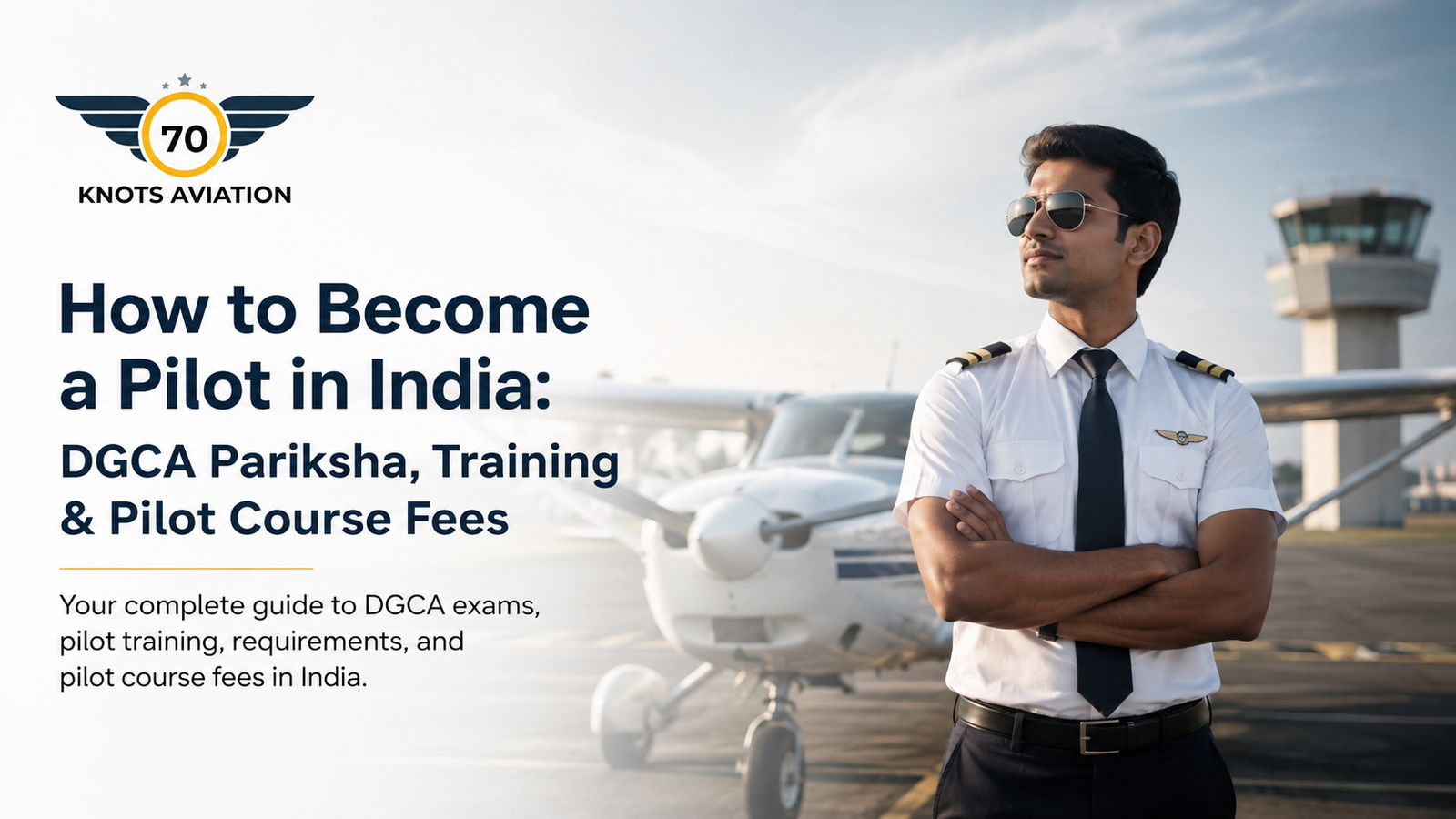
Becoming a pilot is an exciting career goal for students and aviation enthusiasts who dream of flying aircraft professionally. However, becoming a commercial pilot requires proper planning, academic preparation, flight training, and compliance with the regulations established by the Directorate General of Civil Aviation (DGCA). From understanding eligibility requirements to preparing for the DGCA Pariksha and choosing the right flight training institute, every stage plays an important role in building a successful aviation career.
For students beginning their aviation journey, understanding how to become a pilot can make the entire process easier to plan. 70 Knots Aviation helps aspiring pilots understand the requirements involved in pilot training and provides guidance for students preparing for their aviation careers.
How to Become a Pilot in India
The process of becoming a commercial pilot generally involves several important stages. Students should first understand the eligibility requirements and then plan their ground training, examinations, medical assessments, and flight training accordingly.
A typical pathway includes:
-
Completing the required educational qualifications.
-
Meeting the applicable age and medical requirements.
-
Registering for the relevant DGCA examinations.
-
Completing theoretical ground classes.
-
Passing the required DGCA examinations.
-
Completing flight training at an approved flight training organisation.
-
Completing the required flying hours and practical requirements.
-
Applying for the appropriate pilot licence after meeting the applicable requirements.
Students should always verify current DGCA requirements before beginning their training because aviation regulations and procedures can change.
Understanding DGCA Pariksha
The DGCA Pariksha is an important part of the pilot training journey in India. DGCA examinations assess a candidate's theoretical knowledge in areas relevant to aviation and professional flying.
Depending on the licence and training pathway, students may need to study subjects related to areas such as air navigation, aviation meteorology, air regulations, aircraft-related knowledge, and other aviation subjects.
Preparation should not be limited to memorising answers. A strong understanding of aviation concepts can help students during examinations as well as during their subsequent flight training.
Regular study, mock tests, revision, and structured ground classes can make examination preparation more manageable. Students should also keep themselves updated with official examination procedures, eligibility criteria, and examination schedules.
Why Ground Training Matters
Ground training provides the theoretical foundation required before and alongside practical flight training. A student who understands the principles behind navigation, weather, regulations, aircraft systems, and aviation operations can approach flight training with greater confidence.
A structured training programme can also help students organise their preparation according to the examination syllabus. This is particularly useful for students who are unfamiliar with aviation terminology or are transitioning from school or college into professional pilot training.
At 70 Knots Aviation, aspiring pilots can receive guidance designed around the academic and theoretical aspects of their aviation journey.
Pilot Course Fees in India
One of the most important questions students and parents ask is about pilot course fees in India. The total cost can vary considerably depending on the training organisation, location, aircraft type, flying hours, accommodation, examination requirements, medical expenses, and other associated charges.
Students should therefore avoid choosing an institute solely on the basis of a quoted package price. Instead, they should understand exactly what the fee includes and whether additional costs may arise during training.
Expenses may include:
-
Ground school and theoretical training
-
Flight training
-
Examination fees
-
Medical examinations
-
Study material
-
Licence-related charges
-
Accommodation and living expenses
-
Travel expenses
-
Additional flying hours, if required
Before enrolling, students should request a clear fee structure and understand the terms and conditions associated with the training programme.
Choosing the Best Pilot Training Institute in Ramphal Chowk
Selecting the right training institute is an important decision because the quality of guidance received during the early stages can influence a student's overall preparation.
Students searching for the Best Pilot Training institute in Ramphal Chowk should consider factors such as the institute's training approach, faculty experience, course structure, student support, study resources, and guidance related to DGCA examinations.
It is also useful to understand whether the institute focuses on conceptual learning rather than simply examination-oriented preparation. Students should feel comfortable asking questions and seeking clarification about subjects that may initially seem difficult.
For aspiring pilots in Delhi and nearby areas, 70 Knots Aviation is located at:
E-529, Near MCD Office, Ramphal Chowk, Sector 7 Dwarka, New Delhi – 110075
Students and parents can contact the institute to learn more about available aviation training and guidance.
Building a Strong Foundation for a Pilot Career
Pilot training requires discipline, consistency, and attention to detail. Students should develop effective study habits from the beginning rather than waiting until examinations are approaching.
A good preparation routine can include:
-
Creating a realistic daily study schedule
-
Revising important aviation concepts regularly
-
Practising numerical and navigation-based problems
-
Following aviation news and developments
-
Taking mock examinations
-
Maintaining accurate notes
-
Asking instructors about difficult topics
-
Balancing theoretical preparation with practical training
Aviation is a highly regulated profession, so students should also develop a strong understanding of safety procedures and professional responsibilities.
Is Becoming a Pilot Difficult?
Pilot training can be challenging, but the difficulty should not discourage students who are genuinely interested in aviation. The course involves technical subjects, examinations, medical requirements, and practical flying.
The key is consistent preparation. Students who follow a structured study plan and seek guidance when necessary can gradually build the knowledge and skills required for professional pilot training.
Understanding how to become a pilot before enrolling can also help students make better decisions about their education, finances, training pathway, and career goals.
Why Choose 70 Knots Aviation?
70 Knots Aviation focuses on helping aspiring pilots develop the knowledge and preparation needed for their aviation journey. Students can seek guidance regarding ground training, DGCA examination preparation, and the broader process involved in pursuing a professional pilot career.
For students around Dwarka and Ramphal Chowk, the institute's location makes it a convenient option for accessing aviation-related training and guidance.
Those interested in joining can contact 70 Knots Aviation for further information:
Address: E-529, Near MCD Office, Ramphal Chowk, Sector 7 Dwarka, New Delhi – 110075
Phone: +91-9560019676
Email: info@70knotsaviation.com
Common Questions
1. How do I become a pilot in India?
To become a professional pilot, candidates generally need to meet the applicable educational, age, and medical requirements, complete DGCA examinations, undergo approved flight training, fulfil the required flying experience, and obtain the appropriate pilot licence.
2. What is the DGCA Pariksha?
DGCA Pariksha refers to the examinations conducted under DGCA requirements for candidates pursuing aviation licences. The subjects and examination requirements depend on the licence and applicable regulations.
3. How much are pilot course fees in India?
Pilot course fees in India vary depending on the training organisation, flight hours, aircraft, location, accommodation, examination expenses, and other requirements. Students should obtain a detailed fee structure before enrolling.
4. How should I choose a pilot training institute?
Look at factors such as faculty, course structure, training resources, examination preparation, student support, transparency of fees, and the institute's overall approach to aviation education. Do not make your decision based only on price.
- Business
- Technology
- Finance
- Health
- Fashion
- Lifestyle
- Travel
- Food
- Education
- Real Estate
- Automobile
- Entertainment
- Sports
- Pets
- Home Decor
- Gardening
- Parenting
- Wedding
- Beauty
- Gaming
- Photography
- Music
- Movies
- News
- Politics
- Religion
- Astrology
- Law
- Insurance
- Jobs
- Freelancing
- Remote Work
- Blogging
- E-commerce
- WordPress
- OpenCart
- Social Media
- Graphic Design
- Web Design
- Programming
- Mobile Apps
- Artificial Intelligence
- SaaS
- Cyber Security
- Cloud Computing
- Hosting
- SEO
- Content Writing
- Email Marketing
- Affiliate Marketing
- YouTube
- Podcasting
- Interior Design
- DIY
- Crafts
- Art
- Architecture
- Environment
- Agriculture
- Animals
- Fishing
- Hunting
- Survival
- Outdoor
- Fitness
- Yoga
- Meditation
- Mental Health
- Skin Care
- Hair Care
- Makeup
- Jewelry
- Sarees
- Salwar Kameez
- Lehenga Choli
- Kurtis
- Men Fashion
- Women Fashion
- Kids Fashion
- Footwear
- Bags
- Watches
- Luxury
- Shopping
- Coupons
- Electronics
- Smartphones
- Laptops
- Tablets
- Cameras
- Home Appliances
- Kitchen
- Furniture
- Cleaning
- Baby Care
- Senior Care
- Relationships
- Self Improvement
- Motivation
- Quotes
- Festivals
- Events
- Careers
- Remote Work
- Productivity
- Wholesale
- Manufacturing
- Import Export
- Logistics
- Supply Chain
- Human Resources
- Customer Service
