
How to Build a Content Calendar You'll Actually Stick To
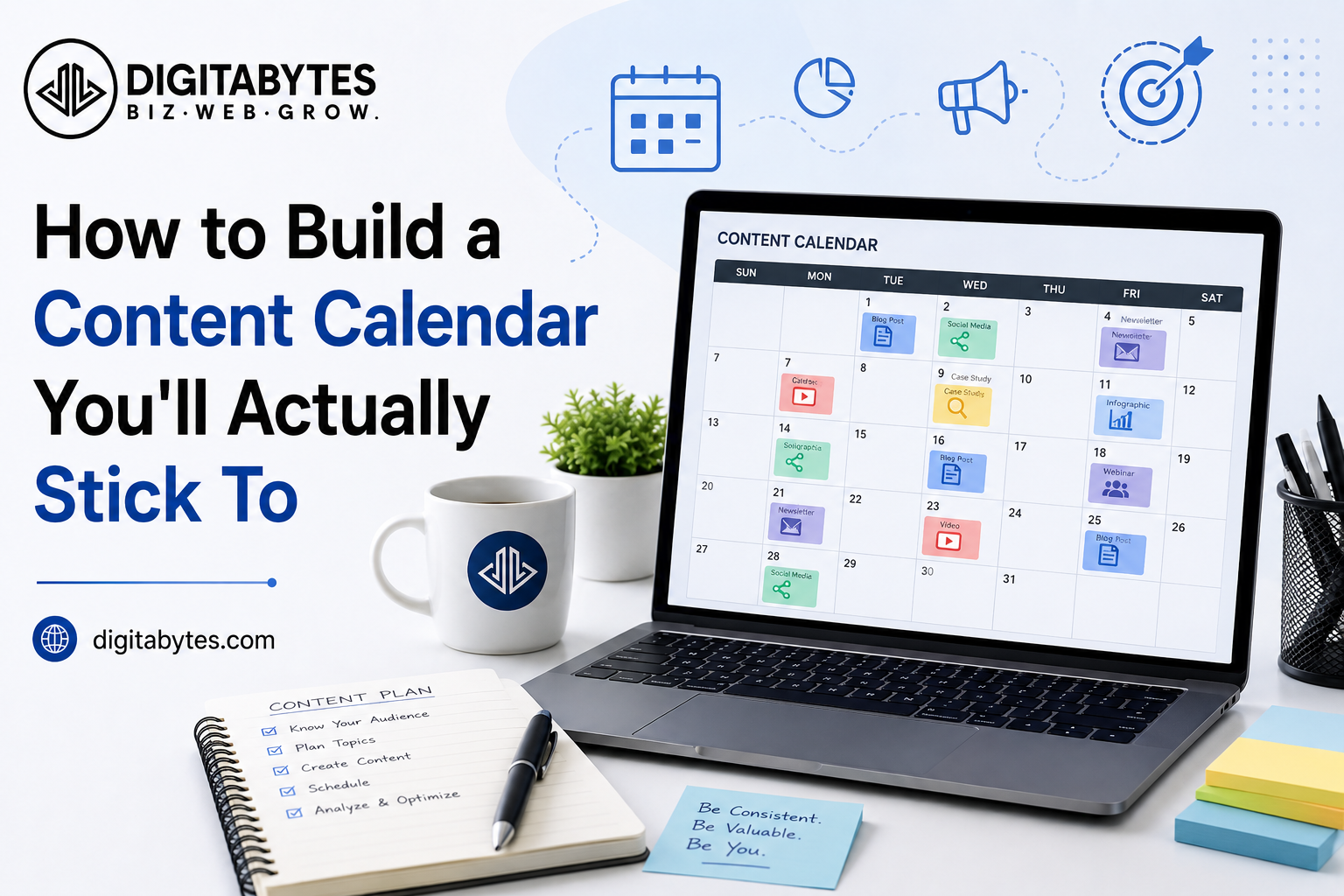
Most content calendars start out ambitious and fall apart within a month or two. A business plans to publish three times a week, gets busy, misses a week, then two, and eventually the calendar becomes something nobody looks at anymore. The problem usually isn't a lack of good intentions. It's that the original plan wasn't realistic for the time and resources actually available.
Start With What's Actually Sustainable, Not What Sounds Impressive
It's tempting to plan an ambitious publishing schedule because more content feels like it should mean more results. In practice, a modest schedule that actually gets followed consistently outperforms an ambitious one that collapses after a few weeks. Before setting a frequency, honestly assess how much time is realistically available for writing, editing, and reviewing content each week, and build the calendar around that number rather than an aspirational one.
Batch Planning Instead of Deciding Week to Week
Deciding what to write about each week, right before it needs to be published, creates unnecessary pressure and often leads to rushed, lower-quality content. Setting aside time to plan a month or even a quarter of topics in advance removes that weekly scramble and makes it much easier to maintain consistency, since the decision-making happens once instead of repeatedly under time pressure.
Mix Content Types to Avoid Burnout
Publishing the same type of content repeatedly, long-form blog posts every single time, for example, can become mentally exhausting over time and lead to procrastination. Mixing in shorter pieces, list-style content, or different formats occasionally keeps the workload more varied and easier to sustain without sacrificing overall output.
Build In Buffer Time for Delays
Content calendars that assume everything will go exactly as planned tend to fall apart the first time something doesn't. Building in a buffer, whether that's an extra few days between drafting and publishing, or a small backlog of ready-to-go content for busy weeks, makes the schedule more resilient to the inevitable disruptions that come up in any business.
Leave Room for Timely, Unplanned Content
A calendar that's completely locked in weeks in advance doesn't leave room for responding to something timely or relevant that comes up unexpectedly. Keeping the schedule flexible enough to occasionally swap in something more immediately relevant, without abandoning the overall plan, tends to produce better engagement than rigidly sticking to a predetermined topic regardless of timing.
Review and Adjust the Calendar Periodically
A content calendar shouldn't be treated as a fixed document set once and never revisited. Reviewing what's actually performing well every couple of months, and adjusting future topics based on that data, keeps the calendar useful rather than just a scheduling tool disconnected from actual results.
A Simple Starting Structure
-
Pick a realistic, sustainable frequency based on actual available time, not an aspirational number.
-
Plan topics at least a month in advance to remove weekly decision fatigue.
-
Mix content formats and lengths to avoid burnout from repetitive work.
-
Build in buffer time for unexpected delays.
-
Leave some flexibility for timely or unplanned content when it makes sense.
-
Review performance periodically and adjust the plan based on what's actually working.
The Bottom Line
A content calendar only works if it's realistic enough to actually follow through on. A team like Digitabytes typically starts with a modest, sustainable cadence and builds from there, rather than starting overly ambitious and scaling back after burnout sets in. Planning ahead, allowing flexibility, and reviewing performance regularly tends to produce a calendar that survives past the first few weeks, which matters far more than how ambitious it looks on day one.
- Business
- Technology
- Finance
- Health
- Fashion
- Lifestyle
- Travel
- Food
- Education
- Real Estate
- Automobile
- Entertainment
- Sports
- Pets
- Home Decor
- Gardening
- Parenting
- Wedding
- Beauty
- Gaming
- Photography
- Music
- Movies
- News
- Politics
- Religion
- Astrology
- Law
- Insurance
- Jobs
- Freelancing
- Remote Work
- Blogging
- E-commerce
- WordPress
- OpenCart
- Social Media
- Graphic Design
- Web Design
- Programming
- Mobile Apps
- Artificial Intelligence
- SaaS
- Cyber Security
- Cloud Computing
- Hosting
- SEO
- Content Writing
- Email Marketing
- Affiliate Marketing
- YouTube
- Podcasting
- Interior Design
- DIY
- Crafts
- Art
- Architecture
- Environment
- Agriculture
- Animals
- Fishing
- Hunting
- Survival
- Outdoor
- Fitness
- Yoga
- Meditation
- Mental Health
- Skin Care
- Hair Care
- Makeup
- Jewelry
- Sarees
- Salwar Kameez
- Lehenga Choli
- Kurtis
- Men Fashion
- Women Fashion
- Kids Fashion
- Footwear
- Bags
- Watches
- Luxury
- Shopping
- Coupons
- Electronics
- Smartphones
- Laptops
- Tablets
- Cameras
- Home Appliances
- Kitchen
- Furniture
- Cleaning
- Baby Care
- Senior Care
- Relationships
- Self Improvement
- Motivation
- Quotes
- Festivals
- Events
- Careers
- Remote Work
- Productivity
- Wholesale
- Manufacturing
- Import Export
- Logistics
- Supply Chain
- Human Resources
- Customer Service
