
Comprehensive Hormone Panel Women Should Know About: A Guide to Hormone Testing
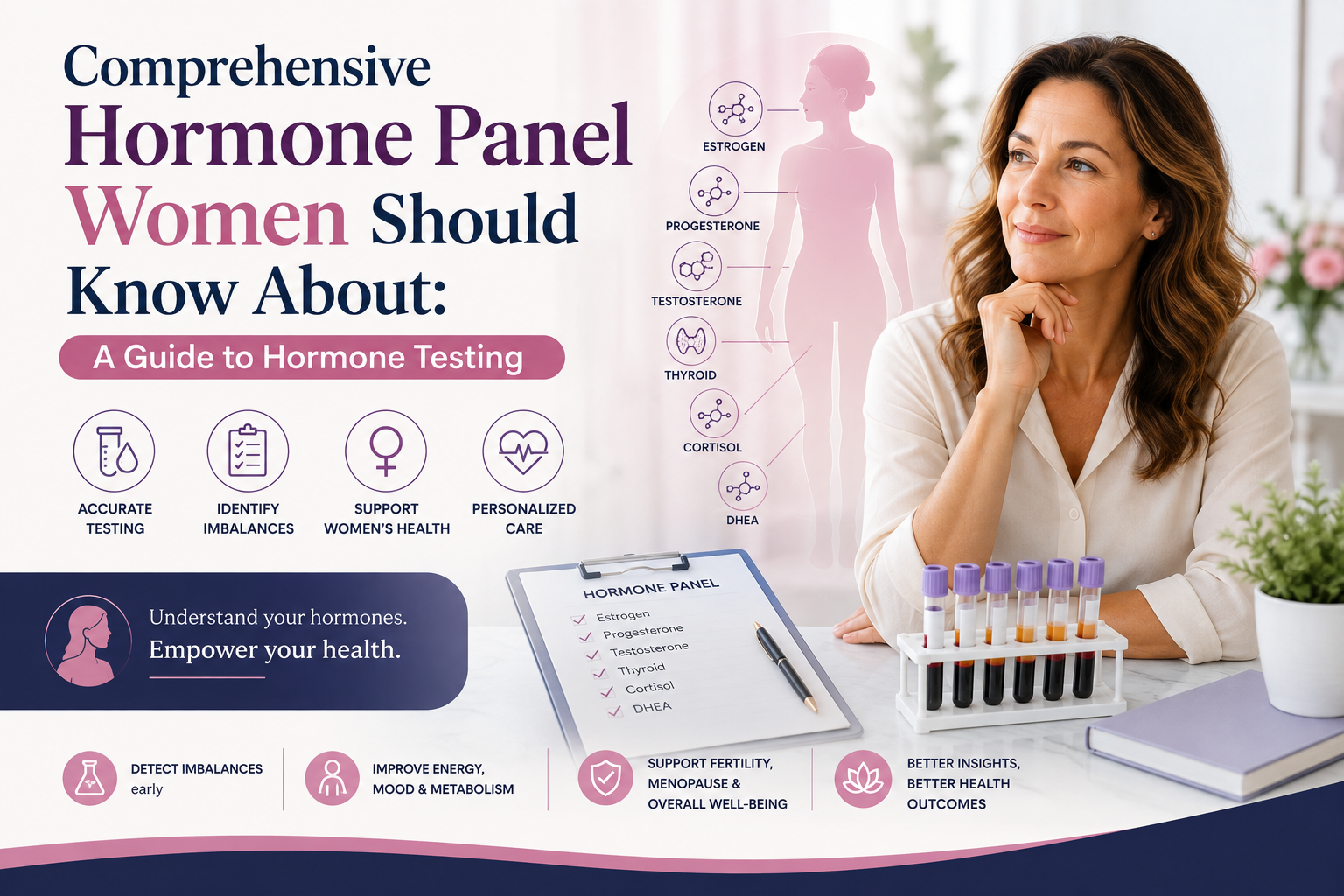
Hormones influence many aspects of women's health, including reproductive function, menstrual cycles, energy, metabolism, sleep, mood, and bone health. When symptoms such as irregular periods, persistent fatigue, changes in weight, hot flashes, or other concerns appear, hormone testing may sometimes provide useful information. However, testing should be selected based on an individual's symptoms, age, medical history, and health goals rather than assuming that every hormone needs to be tested.
A female comprehensive hormone panel may include several hormone measurements depending on the reason for testing. Understanding what these tests can and cannot tell you can make it easier to have a productive conversation with a healthcare professional.
What Is a Hormone Panel?
A hormone panel is a group of laboratory tests used to measure specific hormones or related biomarkers in the body. The exact tests included can vary considerably between patients.
Depending on the clinical situation, testing may involve hormones such as:
- Estrogen, including estradiol
- Progesterone
- Follicle-stimulating hormone (FSH)
- Luteinizing hormone (LH)
- Testosterone
- Thyroid-stimulating hormone (TSH)
- Free or total thyroid hormones when appropriate
- Prolactin
- Other markers when clinically indicated
Not every woman needs all of these tests. A healthcare professional can determine which measurements are appropriate based on symptoms and medical history.
Why Might Women Consider Hormone Testing?
Hormone testing may be considered when a healthcare professional is evaluating certain symptoms or medical concerns. These can include changes in menstrual cycles, fertility-related concerns, symptoms associated with menopause, or signs that may warrant evaluation of thyroid or other endocrine function.
For example, irregular periods can have numerous causes, including pregnancy, perimenopause, thyroid conditions, polycystic ovary syndrome (PCOS), changes in body weight, medications, and other health factors.
Similarly, symptoms such as fatigue or changes in weight are not specific to hormone problems. They can result from many different conditions, lifestyle factors, medications, or sleep issues.
Testing is therefore most useful when it is connected to a specific clinical question.
Hormones and the Menstrual Cycle
Female reproductive hormones naturally fluctuate throughout the menstrual cycle. Estrogen and progesterone, for example, change at different stages of the cycle.
This means that the timing of a blood test can affect the result. A hormone value that is appropriate at one point in the cycle may look very different at another point.
For this reason, women should follow the timing instructions provided by their healthcare professional when a hormone test has been ordered. A single result should also be interpreted in the context of symptoms, menstrual history, medications, and other relevant information.
Hormone Testing During Perimenopause and Menopause
Hormonal changes are a normal part of the transition toward menopause. During perimenopause, hormone levels can fluctuate significantly, and menstrual cycles may become irregular.
Women may experience symptoms such as:
- Hot flashes or night sweats
- Changes in menstrual patterns
- Sleep difficulties
- Mood changes
- Vaginal dryness
- Changes in sexual health
- Changes in body composition
In many cases, clinicians can identify perimenopause or menopause based largely on age, symptoms, and menstrual history. Hormone testing is not automatically required for every woman.
However, laboratory testing may be appropriate in certain situations, particularly when another condition needs to be considered.
Understanding Estrogen and Progesterone
Estrogen and progesterone play important roles in reproductive and overall health.
Estrogen contributes to reproductive function, bone health, and other physiological processes. Progesterone is particularly involved in the menstrual cycle and pregnancy.
Because these hormones fluctuate naturally, interpreting their levels requires context. A result outside a laboratory's reference range does not automatically mean that treatment is necessary.
What About Testosterone in Women?
Women naturally produce testosterone, although generally at lower levels than men. It contributes to sexual health, muscle and bone health, and other physiological functions.
Testosterone testing may be considered when a healthcare professional is evaluating certain symptoms or conditions. Elevated androgen levels, for example, may be relevant when evaluating conditions such as PCOS.
Testing should be interpreted carefully because hormone levels can vary and laboratory methods differ.
Thyroid Testing Is Also Important
The thyroid is not a reproductive organ, but thyroid hormones can have a significant impact on women's health. Thyroid dysfunction can affect energy, temperature regulation, heart rate, menstrual cycles, and other body functions.
TSH is commonly used as an initial thyroid assessment, with additional thyroid testing performed when clinically appropriate.
Because symptoms of thyroid problems can overlap with symptoms associated with hormonal transitions, a healthcare professional may consider thyroid function when evaluating certain complaints.
Can Hormone Tests Explain Weight Gain?
Hormones can influence metabolism and body composition, but weight gain rarely has one single cause.
Changes in reproductive hormones, thyroid function, insulin regulation, sleep, stress, physical activity, medications, nutrition, and muscle mass can all play a role.
A hormone panel should therefore not be viewed as a standalone explanation for weight changes. A broader evaluation may be more useful for understanding the factors contributing to an individual's health concerns.
How Is a Hormone Panel Performed?
Many hormone measurements can be performed using a blood sample. Depending on the hormone and the clinical question, other types of testing may sometimes be considered.
Before testing, patients should ask whether they need to fast, whether the sample needs to be collected at a particular time of day or menstrual-cycle phase, and whether any medications or supplements could affect the results.
Do not stop prescribed medication before testing unless instructed by the healthcare professional who prescribed it.
What Happens After Testing?
Laboratory results are only one part of a medical evaluation. A healthcare professional may compare results with the laboratory's reference ranges while also considering symptoms, age, menstrual history, medications, medical conditions, and other test results.
A result that falls outside a reference range does not necessarily indicate disease, and a result within the reference range does not always rule out a health concern.
This is why professional interpretation is important before making decisions about hormone therapy, supplements, or other treatments.
Telehealth and Personalized Hormone Care
Women who prefer convenient healthcare may search for an online / telehealth functional medicine doctor Mount Pleasant who can discuss symptoms, medical history, lifestyle factors, and appropriate testing remotely when telehealth is clinically suitable.
Telehealth can make consultations more accessible, but it does not mean every concern can be evaluated entirely online. Some situations require an in-person examination, additional testing, or referral to another healthcare professional.
A responsible telehealth approach should focus on appropriate evaluation rather than automatically ordering extensive testing or prescribing treatment based on symptoms alone.
How Thryve Clinic Supports Personalized Wellness
Thryve Clinic takes a personalized approach to wellness through services that include advanced biomarker testing, at-home lab testing, mobile phlebotomy, telemedicine consultations, and physician-guided wellness plans.
For women interested in understanding their health more comprehensively, appropriate laboratory testing can be one component of a broader assessment. Thryve Clinic's approach can help connect health information with individual goals while emphasizing professional guidance and personalized care.
The specific tests that may be appropriate depend on the patient's circumstances and should be determined with a qualified healthcare professional.
Questions to Ask Before Getting Hormone Testing
Before ordering or scheduling a hormone panel, consider asking:
- What symptoms or health concerns are we investigating?
- Which hormones are actually relevant to my situation?
- Does the timing of the test matter?
- Do I need to prepare before the blood draw?
- Could any medications or supplements affect the results?
- How will the results be interpreted?
- What would happen if a result is outside the expected range?
- Are additional tests needed to understand the results?
These questions can help prevent unnecessary testing and make the results more meaningful.
The Importance of Looking at the Whole Picture
Hormones are important, but they are only one part of women's health. Nutrition, sleep, physical activity, stress, reproductive history, metabolic health, medications, and other medical factors can all contribute to how a woman feels.
A female comprehensive hormone panel can provide useful information when ordered for an appropriate clinical reason, but the value of testing comes from interpreting those results within the broader context of the individual.
Whether testing is performed through a traditional laboratory or coordinated through a convenient telehealth and at-home testing model, the goal should be the same: to gather relevant information and use it to support informed, personalized healthcare decisions.
- Business
- Technology
- Finance
- Health
- Fashion
- Lifestyle
- Travel
- Food
- Education
- Real Estate
- Automobile
- Entertainment
- Sports
- Pets
- Home Decor
- Gardening
- Parenting
- Wedding
- Beauty
- Gaming
- Photography
- Music
- Movies
- News
- Politics
- Religion
- Astrology
- Law
- Insurance
- Jobs
- Freelancing
- Remote Work
- Blogging
- E-commerce
- WordPress
- OpenCart
- Social Media
- Graphic Design
- Web Design
- Programming
- Mobile Apps
- Artificial Intelligence
- SaaS
- Cyber Security
- Cloud Computing
- Hosting
- SEO
- Content Writing
- Email Marketing
- Affiliate Marketing
- YouTube
- Podcasting
- Interior Design
- DIY
- Crafts
- Art
- Architecture
- Environment
- Agriculture
- Animals
- Fishing
- Hunting
- Survival
- Outdoor
- Fitness
- Yoga
- Meditation
- Mental Health
- Skin Care
- Hair Care
- Makeup
- Jewelry
- Sarees
- Salwar Kameez
- Lehenga Choli
- Kurtis
- Men Fashion
- Women Fashion
- Kids Fashion
- Footwear
- Bags
- Watches
- Luxury
- Shopping
- Coupons
- Electronics
- Smartphones
- Laptops
- Tablets
- Cameras
- Home Appliances
- Kitchen
- Furniture
- Cleaning
- Baby Care
- Senior Care
- Relationships
- Self Improvement
- Motivation
- Quotes
- Festivals
- Events
- Careers
- Remote Work
- Productivity
- Wholesale
- Manufacturing
- Import Export
- Logistics
- Supply Chain
- Human Resources
- Customer Service
