
Do Solar Panels Really Work on Cloudy Days?
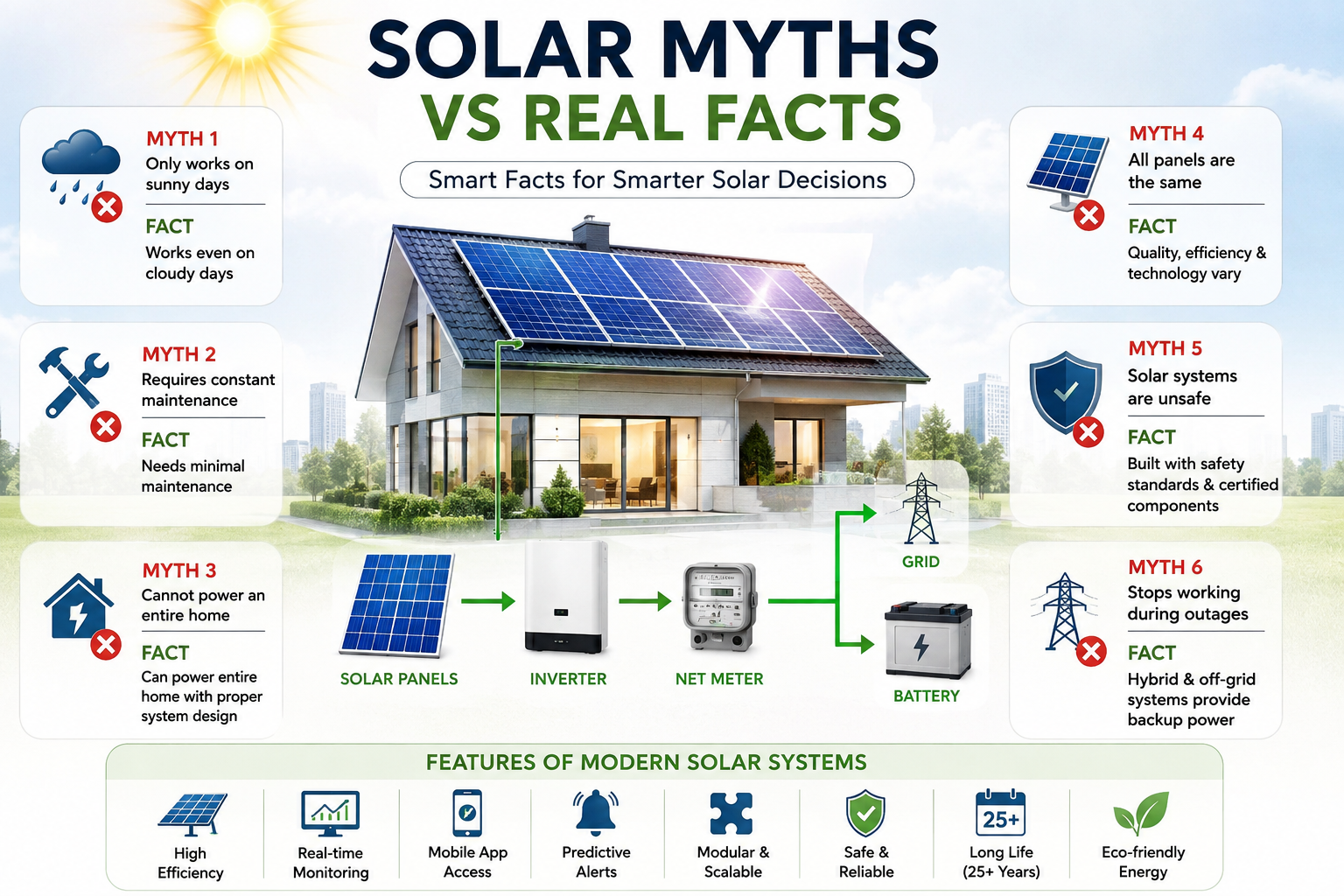
A newly constructed residential community is evaluating rooftop solar installations to reduce electricity bills and improve energy resilience. While some homeowners are eager to adopt renewable energy, others hesitate because they have heard that solar panels do not work during cloudy weather, require constant maintenance, or are only suitable for large commercial buildings. These misconceptions often delay investment decisions. Understanding the facts behind a solar system for home is essential for making informed choices that support long-term energy savings and sustainable living.
Why Misconceptions About Solar System for Home Still Exist
As solar technology has evolved, many outdated beliefs continue to circulate despite significant improvements in engineering, efficiency, and monitoring systems. A modern solar system is designed using advanced photovoltaic technology, intelligent inverters, and safety-compliant electrical infrastructure to deliver reliable performance in residential, commercial, and industrial applications.
Separating facts from myths helps homeowners evaluate renewable energy solutions based on engineering principles rather than assumptions.
Understanding How a Solar System for Home Actually Works
A solar system for home converts sunlight into direct current (DC) electricity through photovoltaic modules. A solar inverter then converts this into alternating current (AC) for household use. Depending on the system configuration, excess electricity is either exported to the utility grid through net metering or stored in batteries for backup power.
Modern installations also include real-time monitoring platforms that allow users to track electricity generation, identify faults, and monitor system performance through mobile applications.
Myth 1: Solar Panels Only Work on Bright Sunny Days
This is one of the most common misconceptions.
Solar panels generate electricity whenever daylight reaches the photovoltaic cells. Although output is higher under direct sunlight, modern panels continue producing energy during cloudy or overcast conditions.
System performance depends on irradiation levels, panel orientation, shading, and installation quality rather than clear skies alone.
Myth 2: Solar Systems Require Constant Maintenance
A professionally installed rooftop solar panel requires relatively little maintenance.
Routine inspections generally include:
-
Cleaning dust or debris from panels
-
Inspecting electrical connections
-
Monitoring inverter performance
-
Verifying grounding systems
-
Reviewing energy generation reports
Regular Solar panel maintenance services help maintain efficiency, but solar systems are not high-maintenance technologies.
Myth 3: Solar Energy Cannot Power an Entire Home
A properly engineered system is designed according to household energy consumption.
Engineers calculate electricity demand, rooftop availability, and future expansion requirements before determining system capacity. Depending on the selected configuration, solar energy can supply a significant portion—or even all—of a home's electricity requirements.
Battery storage and hybrid configurations further improve energy independence.
Myth 4: All Solar Panels Perform the Same
Panel quality varies considerably.
The best solar panels differ in efficiency, degradation rate, temperature performance, warranty coverage, and manufacturing quality.
Common technologies include:
-
Monocrystalline panels for maximum efficiency
-
Polycrystalline panels for balanced cost and performance
-
Thin-film panels for specialized applications
Selecting panels based solely on purchase price often results in lower long-term performance.
Myth 5: Solar Systems Are Unsafe
Modern installations are designed according to established electrical safety standards.
Professional installations include:
-
Earthing and grounding
-
Surge protection
-
DC and AC isolation
-
Fire safety measures
-
Lightning protection where required
-
Certified electrical components
When installed correctly, solar systems operate safely for decades.
Myth 6: Solar Stops Working During Power Outages
The answer depends on system type.
-
On-grid systems automatically disconnect during utility outages for safety.
-
Off-grid systems continue operating using battery storage.
-
Hybrid systems provide backup power while maintaining grid connectivity.
Choosing the correct configuration depends on energy security requirements and local grid reliability.
Features of Modern Solar Systems
Today's residential solar systems offer capabilities far beyond simple electricity generation.
Important features include:
-
High-efficiency photovoltaic technology
-
Intelligent inverter control
-
Remote monitoring
-
Mobile application access
-
Real-time performance tracking
-
Predictive maintenance alerts
-
Modular expansion capability
-
Grid synchronization
-
Weather-resistant construction
-
Low maintenance requirements
-
Long operational life exceeding 25 years
-
Reliable long-term power generation
These engineering improvements continue to increase system reliability and operational efficiency.
Applications Across Multiple Sectors
Solar energy supports a wide range of residential and commercial applications.
Typical installations include:
-
Residential rooftop systems
-
Apartment complexes
-
Commercial office buildings
-
Hospitals
-
Manufacturing facilities
-
Educational institutions
-
Hotels
-
Shopping centres
-
Government infrastructure
-
Agricultural irrigation projects
-
Warehouses
-
Smart city developments
Each installation is designed according to site conditions, electrical demand, and operational objectives.
Understanding Solar Panel System Cost
Many buyers assume lower purchase prices always represent better value.
In reality, Solar panel system cost depends on engineering requirements rather than equipment alone.
Factors influencing project value include:
-
Available rooftop area
-
Household electricity demand
-
Panel technology
-
Inverter capacity
-
Battery integration
-
Structural requirements
-
Installation complexity
-
Monitoring systems
-
Grid connection
-
Net metering approvals
-
After-sales support
-
Lifecycle operating costs
Similarly, solar system for home price varies according to capacity, equipment quality, and project-specific engineering requirements instead of a fixed market rate.
How to Choose the Right Installation Partner
Professional design and installation significantly influence long-term performance.
Before selecting a provider, evaluate:
-
Engineering expertise
-
EPC capabilities
-
Project portfolio
-
Product testing procedures
-
MNRE and BIS compliance
-
Warranty coverage
-
Installation quality
-
Technical support
-
AMC availability
-
Documentation assistance
-
Long-term maintenance capability
Organizations delivering integrated renewable energy solutions, including a sigma power tech solar panel system, generally emphasize engineering quality, system reliability, and lifecycle performance instead of focusing solely on equipment supply.
Common Mistakes Buyers Should Avoid
Many installation problems originate during project planning rather than system operation.
Avoid these mistakes:
-
Skipping professional site assessment
-
Ignoring future electricity requirements
-
Selecting equipment solely on initial price
-
Underestimating roof shading
-
Choosing incompatible inverter-panel combinations
-
Ignoring net metering regulations
-
Delaying preventive maintenance
-
Poor installation practices
-
Not using monitoring software effectively
Educational demonstrations using a solar system model or classroom solar system project are useful for understanding basic photovoltaic principles, but residential installations require detailed engineering calculations, electrical protection, and regulatory compliance.
Conclusion
Many concerns surrounding residential solar energy are based on outdated information rather than current engineering practices. A professionally designed solar system for home offers dependable electricity generation, low maintenance requirements, advanced monitoring capabilities, and long-term operational reliability. By evaluating system design, installation quality, regulatory compliance, and lifecycle value instead of relying on common myths, homeowners can make informed investment decisions that reduce electricity costs, improve energy independence, and contribute to a cleaner, more sustainable energy future.
- Business
- Technology
- Finance
- Health
- Fashion
- Lifestyle
- Travel
- Food
- Education
- Real Estate
- Automobile
- Entertainment
- Sports
- Pets
- Home Decor
- Gardening
- Parenting
- Wedding
- Beauty
- Gaming
- Photography
- Music
- Movies
- News
- Politics
- Religion
- Astrology
- Law
- Insurance
- Jobs
- Freelancing
- Remote Work
- Blogging
- E-commerce
- WordPress
- OpenCart
- Social Media
- Graphic Design
- Web Design
- Programming
- Mobile Apps
- Artificial Intelligence
- SaaS
- Cyber Security
- Cloud Computing
- Hosting
- SEO
- Content Writing
- Email Marketing
- Affiliate Marketing
- YouTube
- Podcasting
- Interior Design
- DIY
- Crafts
- Art
- Architecture
- Environment
- Agriculture
- Animals
- Fishing
- Hunting
- Survival
- Outdoor
- Fitness
- Yoga
- Meditation
- Mental Health
- Skin Care
- Hair Care
- Makeup
- Jewelry
- Sarees
- Salwar Kameez
- Lehenga Choli
- Kurtis
- Men Fashion
- Women Fashion
- Kids Fashion
- Footwear
- Bags
- Watches
- Luxury
- Shopping
- Coupons
- Electronics
- Smartphones
- Laptops
- Tablets
- Cameras
- Home Appliances
- Kitchen
- Furniture
- Cleaning
- Baby Care
- Senior Care
- Relationships
- Self Improvement
- Motivation
- Quotes
- Festivals
- Events
- Careers
- Remote Work
- Productivity
- Wholesale
- Manufacturing
- Import Export
- Logistics
- Supply Chain
- Human Resources
- Customer Service
