
How Assisted Living Software Helps Care Teams Work Smarter
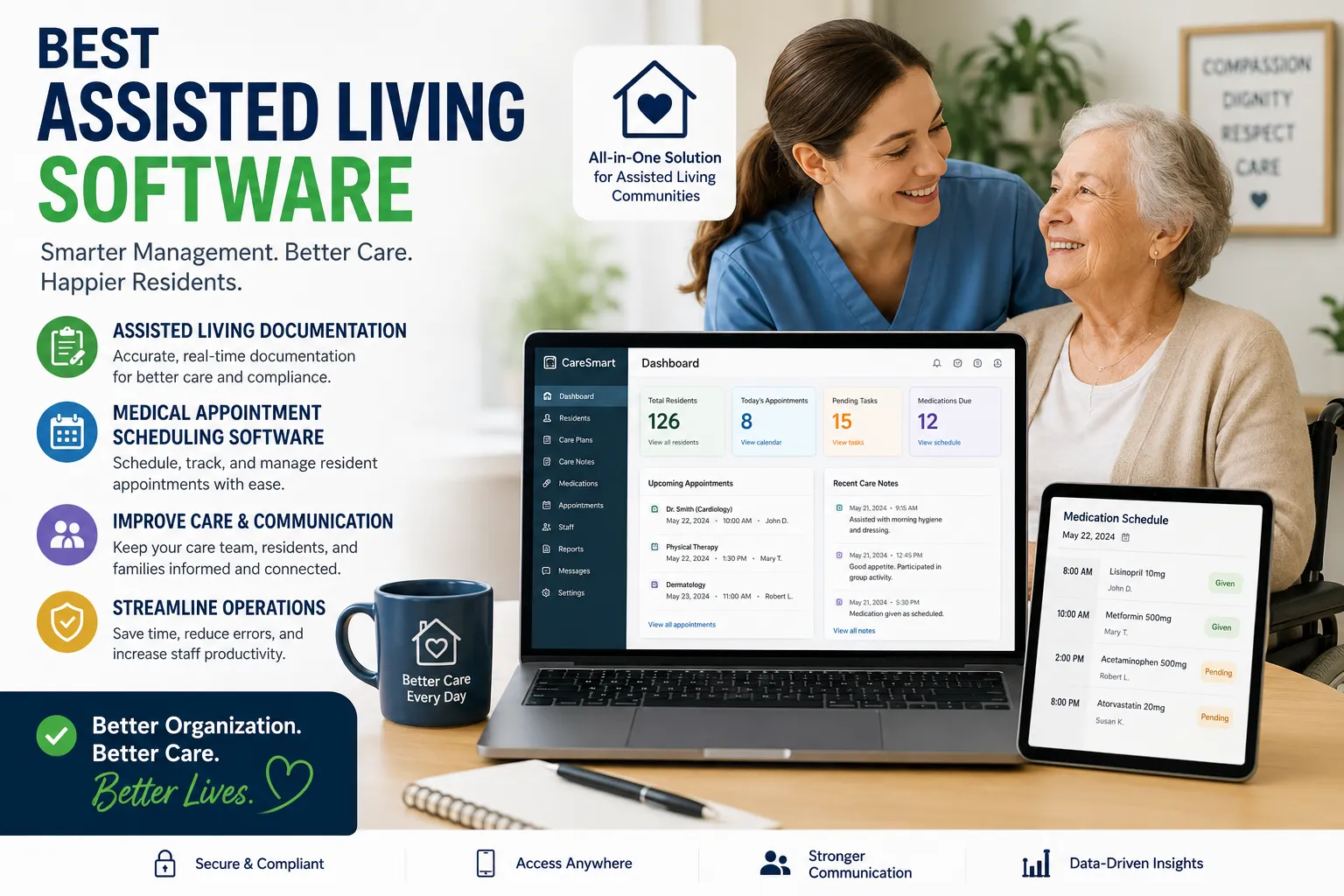
Running an assisted living community involves hundreds of small tasks every day. Staff members need to coordinate resident care, update records, manage medications, communicate with families, organize schedules, and complete documentation while remaining focused on the people they serve.
When these responsibilities are handled manually, even a well-organized facility can experience delays and communication problems. A caregiver may not see an important resident update, an administrator may spend hours reviewing paperwork, or a care plan may not be updated quickly enough after a resident's needs change.
The best assisted living software can address these challenges by connecting important care and administrative processes in one digital environment. Instead of relying on paper files, spreadsheets, and separate applications, care teams can access resident information, documentation, schedules, and reports through a centralized system.
Common Problems in Assisted Living Operations
Before selecting a technology solution, it is important to understand the problems the software should actually solve.
Assisted living communities commonly deal with:
- Incomplete resident records
- Repetitive paperwork
- Communication gaps between shifts
- Difficulty tracking care activities
- Manual scheduling conflicts
- Delayed documentation
- Time-consuming compliance preparation
- Limited visibility into resident progress
- Difficulty locating historical information
These problems can affect staff productivity and make consistent care more difficult.
A digital care management platform can reduce many of these obstacles by creating a structured workflow for caregivers and administrators.
What Should Assisted Living Software Manage?
A useful platform should support more than one isolated task. The goal is to create a connected workflow where information can move efficiently between different areas of the organization.
Depending on the provider, useful capabilities may include:
- Resident profiles
- Individual care plans
- Assessments
- Medication records
- Care tasks
- Staff scheduling
- Progress documentation
- Incident reporting
- Activity tracking
- Family communication
- Reports and analytics
Centralizing these functions reduces the need to repeatedly enter the same information into different systems.
The Role of Healthcare Documentation
Accurate documentation is essential for maintaining continuity of care. Caregivers need reliable information about what happened during previous shifts, while administrators need organized records for oversight and reporting.
Healthcare documentation software can make this process more efficient by allowing staff to record information electronically and retrieve it when needed.
Depending on the organization's workflow, documentation may include:
- Daily care observations
- Resident progress
- Medication administration
- Changes in behavior
- Nutrition and hydration
- Mobility assistance
- Personal care activities
- Incidents and follow-up actions
- Care plan updates
- Communication with healthcare professionals
Digital records make it easier for authorized team members to review relevant information without searching through physical files.
How Digital Documentation Saves Staff Time
One of the biggest advantages of digital documentation is reducing unnecessary administrative work.
Instead of completing handwritten forms and transferring information later, caregivers can document activities closer to the time they occur. This can help reduce forgotten details and eliminate duplicate data entry.
Templates can also guide staff through required fields. This creates a more consistent documentation process and makes records easier for supervisors to review.
For administrators, searchable records can significantly reduce the time required to locate specific information.
Improving Communication Between Caregivers
Shift changes can create communication challenges when information is shared primarily through verbal conversations or handwritten notes.
A centralized system gives authorized caregivers access to recent resident updates before starting their shift. This helps them understand completed tasks, outstanding concerns, and changes in care requirements.
Better communication can support:
- Smoother shift handoffs
- More consistent care
- Faster identification of concerns
- Fewer misunderstandings
- Better coordination among departments
Technology does not replace communication between people, but it gives teams a reliable source of information to support those conversations.
Supporting Personalized Resident Care
Every resident has different preferences, routines, abilities, and care requirements.
A well-designed platform can help staff maintain individualized care information rather than treating every resident the same way.
For example, caregivers may be able to review a resident's preferred daily routine, mobility requirements, dietary considerations, activities, and current care plan before providing assistance.
This supports a more person-centered approach and helps caregivers deliver services based on documented needs.
Benefits for Assisted Living Administrators
Managers need visibility across the entire community, not just individual resident records.
Modern care management technology can provide dashboards and reports that help administrators monitor operational information such as:
- Documentation completion
- Care task status
- Staff schedules
- Resident activities
- Incident records
- Compliance-related information
- Workflow performance
These insights can help management identify bottlenecks and determine where additional training or process improvements may be needed.
What to Consider Before Selecting a Platform
Choosing software based only on the number of features can lead to unnecessary complexity. The most useful solution is one that fits the organization's actual workflow.
Before making a decision, consider:
Ease of Use
Caregivers should be able to learn the system without extensive technical knowledge.
Mobile Accessibility
Mobile access can be particularly valuable when staff members need to document care while moving throughout a facility.
Customization
Documentation templates and care workflows should accommodate the organization's specific requirements.
Security
Resident information should be protected through appropriate access controls and security practices.
Reporting
Administrators should have practical reports that help them understand operational performance.
Scalability
The system should remain useful as the community adds residents, employees, services, or locations.
Helping Caregivers Focus on Residents
Technology is most valuable when it reduces unnecessary administrative pressure.
When caregivers spend less time searching for records or completing repetitive paperwork, they can devote more attention to residents. Faster access to information can also help staff prepare for each shift and respond appropriately when circumstances change.
This creates a practical connection between operational efficiency and resident experience.
A Smarter Approach to Assisted Living Management
Digital transformation does not mean changing every process at once. Assisted living providers can begin by identifying the areas that create the greatest administrative burden and then introduce technology that directly addresses those challenges.
A connected platform can gradually bring resident management, documentation, scheduling, care planning, and reporting into a more organized workflow.
The result is not simply less paperwork. It can mean better visibility, stronger communication, more consistent documentation, and more time for direct resident support.
Final Thoughts
The best assisted living software should solve real operational problems rather than simply provide a long list of features. For care communities, the most valuable technology is easy for staff to use, supports accurate resident records, improves communication, and reduces repetitive administrative responsibilities.
When integrated with effective healthcare documentation software, digital care systems can help caregivers maintain organized records, support individualized care plans, and give administrators better visibility into daily operations.
- Business
- Technology
- Finance
- Health
- Fashion
- Lifestyle
- Travel
- Food
- Education
- Real Estate
- Automobile
- Entertainment
- Sports
- Pets
- Home Decor
- Gardening
- Parenting
- Wedding
- Beauty
- Gaming
- Photography
- Music
- Movies
- News
- Politics
- Religion
- Astrology
- Law
- Insurance
- Jobs
- Freelancing
- Remote Work
- Blogging
- E-commerce
- WordPress
- OpenCart
- Social Media
- Graphic Design
- Web Design
- Programming
- Mobile Apps
- Artificial Intelligence
- SaaS
- Cyber Security
- Cloud Computing
- Hosting
- SEO
- Content Writing
- Email Marketing
- Affiliate Marketing
- YouTube
- Podcasting
- Interior Design
- DIY
- Crafts
- Art
- Architecture
- Environment
- Agriculture
- Animals
- Fishing
- Hunting
- Survival
- Outdoor
- Fitness
- Yoga
- Meditation
- Mental Health
- Skin Care
- Hair Care
- Makeup
- Jewelry
- Sarees
- Salwar Kameez
- Lehenga Choli
- Kurtis
- Men Fashion
- Women Fashion
- Kids Fashion
- Footwear
- Bags
- Watches
- Luxury
- Shopping
- Coupons
- Electronics
- Smartphones
- Laptops
- Tablets
- Cameras
- Home Appliances
- Kitchen
- Furniture
- Cleaning
- Baby Care
- Senior Care
- Relationships
- Self Improvement
- Motivation
- Quotes
- Festivals
- Events
- Careers
- Remote Work
- Productivity
- Wholesale
- Manufacturing
- Import Export
- Logistics
- Supply Chain
- Human Resources
- Customer Service
