
Regulatory Affairs and Pharmacovigilance in Germany: Key Strategies for Pharma Market Success
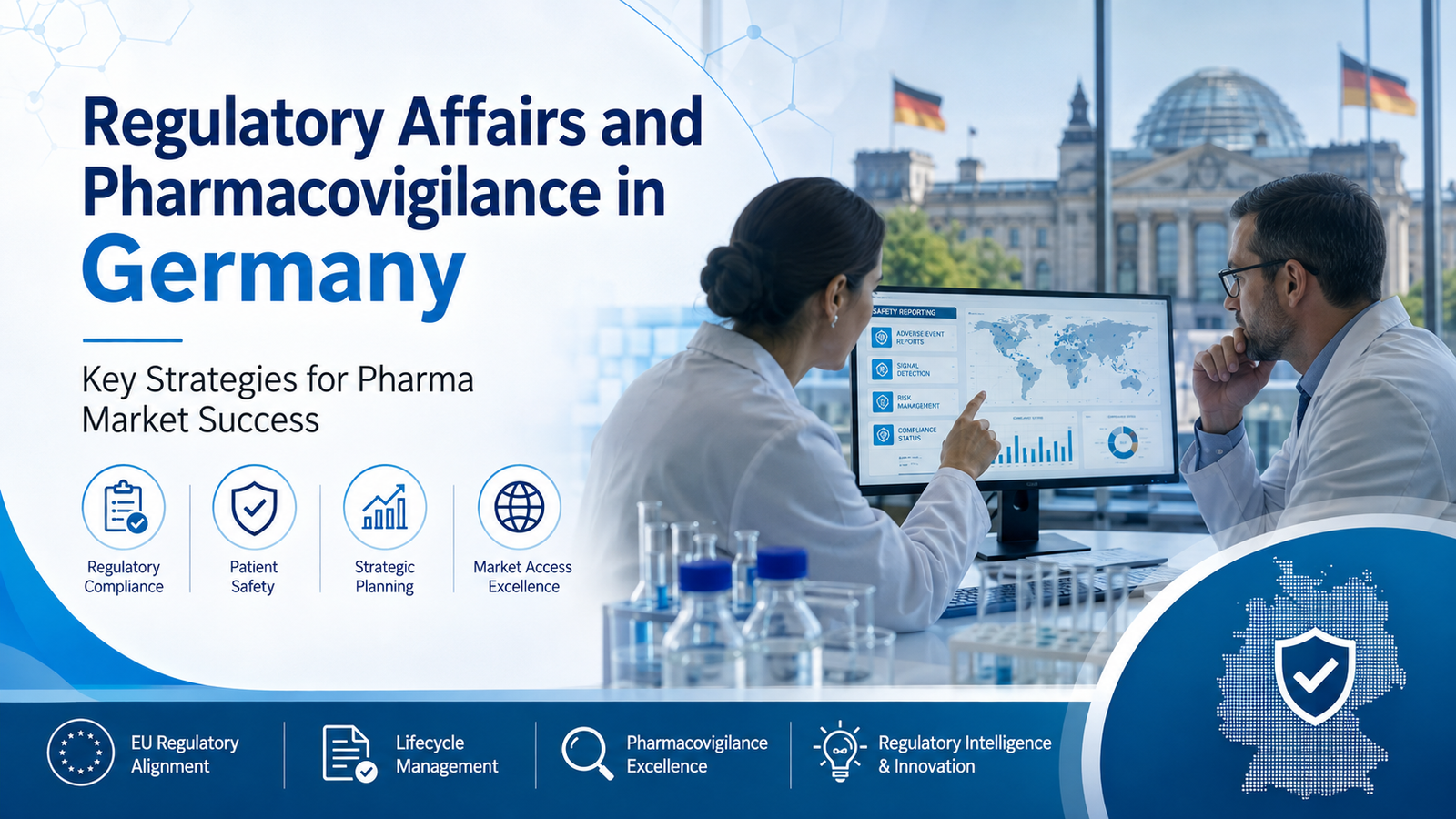
Germany is one of the most influential pharmaceutical markets in Europe, offering significant opportunities for innovative medicines, biotechnology products, medical devices, and advanced therapies. However, entering and maintaining market presence in Germany requires more than scientific innovation. Companies must navigate complex regulatory pathways, evolving European Union (EU) legislation, safety monitoring obligations, and stringent compliance expectations.
Regulatory Affairs (RA) and Pharmacovigilance (PV) functions play a critical role in ensuring that healthcare products meet regulatory requirements throughout their lifecycle. From initial development and marketing authorization applications to post-market surveillance and regulatory intelligence, these disciplines help organizations maintain compliance while supporting patient safety.
The German regulatory environment operates within the broader framework of the European Medicines Agency (EMA), the European Commission, and national authorities such as the Federal Institute for Drugs and Medical Devices (BfArM) and Paul-Ehrlich-Institut. Companies must understand both centralized European requirements and country-specific expectations to successfully commercialize pharmaceutical products.
A well-defined regulatory strategy, proactive safety management system, and continuous regulatory monitoring can significantly reduce compliance risks and improve operational efficiency. Many organizations therefore seek specialized Life Science Consulting Services to strengthen regulatory decision-making, optimize submissions, and manage complex compliance requirements across global markets.
This article explores the importance of regulatory affairs and pharmacovigilance in Germany, key compliance considerations, emerging trends, and strategic approaches that pharmaceutical and healthcare companies should consider.
Understanding Regulatory Affairs in Germany’s Pharmaceutical Landscape
The Growing Importance of Regulatory Affairs Functions
Regulatory Affairs serves as the connection between pharmaceutical companies, regulatory authorities, and healthcare systems. It ensures that medicinal products, medical devices, and combination products comply with applicable regulations before and after commercialization.
In Germany, regulatory professionals manage various activities, including:
- Regulatory submission planning
- Marketing authorization applications
- Scientific advice interactions
- Regulatory documentation preparation
- Labeling compliance
- Variation management
- Regulatory lifecycle maintenance
- Post-approval regulatory obligations
The increasing complexity of global regulations has transformed Regulatory Affairs from an administrative function into a strategic business partner. Regulatory professionals now contribute to product development decisions, market access planning, risk management, and commercialization strategies.
Companies expanding into Germany often require specialized Regulatory Affairs Services in Germany to ensure alignment with EU regulations, national requirements, and local regulatory expectations.
Role of Regulatory Affairs in Product Development and Market Access
Supporting Successful Regulatory Submissions
A successful regulatory submission requires accurate scientific documentation, regulatory compliance, and effective communication with authorities.
Regulatory Affairs teams support organizations by coordinating:
- Common Technical Document (CTD) preparation
- Module review and publishing
- Regulatory authority correspondence
- Submission tracking
- Deficiency response management
- Post-approval commitments
For pharmaceutical companies, early regulatory involvement can prevent costly delays by identifying potential issues during clinical development.
Regulatory Requirements Across Product Lifecycles
A product’s regulatory journey does not end after approval. Continuous compliance is required throughout commercialization.
Key lifecycle activities include:
- Safety updates
- Regulatory variations
- Manufacturing changes
- Label updates
- New indication approvals
- Regulatory renewals
A comprehensive approach to the Regulatory Affairs Lifecycle helps organizations manage regulatory obligations from development through product discontinuation.
Importance of Pharmacovigilance in Germany
Protecting Patient Safety Through Continuous Monitoring
Pharmacovigilance focuses on detecting, evaluating, understanding, and preventing adverse effects associated with medicines.
Germany follows strict EU pharmacovigilance requirements, requiring pharmaceutical companies to maintain robust safety systems and continuously monitor benefit-risk profiles.
Key pharmacovigilance activities include:
- Individual case safety reports (ICSR) management
- Signal detection and evaluation
- Periodic safety update reports (PSURs)
- Risk management plans (RMPs)
- Literature surveillance
- Regulatory safety reporting
A strong PV system ensures that emerging safety concerns are identified early and appropriate regulatory actions are implemented.
Pharmacovigilance Compliance Challenges
Pharmaceutical organizations operating in Germany may face challenges such as:
- Changing EU pharmacovigilance legislation
- Increasing safety data volumes
- Global case processing requirements
- Quality management expectations
- Regulatory inspection readiness
Organizations frequently rely on specialized Pharmacovigilance Services in Germany to improve safety monitoring capabilities and maintain compliance with European regulatory standards.
Regulatory Strategy for Successful Market Entry and Expansion
Why Regulatory Strategy Matters
A regulatory strategy provides a structured roadmap for achieving approval objectives while minimizing regulatory risks.
An effective strategy considers:
- Target markets
- Regulatory pathways
- Development timelines
- Evidence requirements
- Health authority expectations
- Commercial objectives
Early strategic planning enables companies to make informed decisions regarding clinical development programs, submission approaches, and lifecycle opportunities.
Specialized Regulatory Strategy Services help organizations evaluate regulatory pathways, anticipate challenges, and develop practical approaches aligned with business goals.
Integrating Regulatory Intelligence Into Strategy
Regulatory intelligence allows companies to understand changing regulatory environments and anticipate future requirements.
It involves monitoring:
- Regulatory guideline updates
- Authority publications
- Competitor approvals
- Policy changes
- Emerging scientific standards
Modern pharmaceutical companies increasingly use Regulatory Intelligence Tools to collect, analyze, and apply regulatory information for strategic decision-making.
Managing Compliance Challenges Through Gap Assessment
Identifying Regulatory Weaknesses Before They Become Risks
Regulatory compliance gaps can create significant challenges during inspections, submissions, and product maintenance activities.
A regulatory gap assessment evaluates current processes against applicable requirements and identifies areas requiring improvement.
Common assessment areas include:
- Regulatory documentation quality
- Standard operating procedures (SOPs)
- Pharmacovigilance processes
- Submission workflows
- Quality management systems
- Data integrity practices
Benefits of Regulatory Gap Analysis
A structured gap assessment enables organizations to:
- Improve compliance readiness
- Reduce regulatory risks
- Prioritize corrective actions
- Strengthen operational processes
- Prepare for inspections
Companies can leverage Gap Analysis and Remediation Services to identify deficiencies and implement effective improvement strategies.
Role of Digital Transformation in Regulatory Affairs and Pharmacovigilance
Technology-Driven Regulatory Operations
Digital transformation is reshaping how pharmaceutical companies manage regulatory information and safety data.
Advanced technologies support:
- Automated document management
- Regulatory tracking
- Data analytics
- Artificial intelligence-assisted review
- Workflow optimization
Artificial intelligence and automation are increasingly being adopted to improve efficiency while maintaining compliance standards.
AI and the Future of Regulatory Intelligence
AI-powered regulatory platforms can help organizations:
- Identify regulatory changes faster
- Analyze large volumes of regulatory documents
- Improve decision-making
- Reduce manual monitoring efforts
However, human expertise remains essential because regulatory decisions require scientific interpretation, strategic judgment, and compliance understanding.
Future Trends Shaping Regulatory Affairs and Pharmacovigilance
The pharmaceutical regulatory landscape continues to evolve due to scientific innovation, digital health advancements, and increasing regulatory complexity.
Key trends include:
Increased Use of Real-World Evidence (RWE)
Regulators are increasingly considering real-world data to support:
- Safety evaluations
- Effectiveness assessments
- Lifecycle decisions
Growth of Advanced Therapies
Cell and gene therapies, personalized medicines, and biotechnology products require specialized regulatory approaches.
Greater Focus on Regulatory Harmonization
Global pharmaceutical companies are seeking consistent regulatory strategies across multiple markets while addressing regional differences.
Expansion of Automation and AI
Automation will continue improving regulatory operations, but organizations must ensure transparency, data governance, and regulatory compliance.
Conclusion
Germany’s pharmaceutical market offers significant opportunities, but success depends on strong regulatory planning, continuous compliance management, and effective safety monitoring.
Regulatory Affairs and Pharmacovigilance teams play an essential role in guiding products from development to commercialization while ensuring patient safety and regulatory compliance. Companies that invest in strategic regulatory planning, advanced intelligence capabilities, and robust lifecycle management are better positioned to navigate evolving healthcare requirements.
As regulations become increasingly complex, organizations must adopt proactive approaches that combine scientific expertise, regulatory knowledge, and technology-driven solutions. A strong regulatory foundation enables pharmaceutical companies to accelerate market access while maintaining the highest standards of quality and safety.
Frequently Asked Questions (FAQs)
1. What is the role of Regulatory Affairs in pharmaceutical companies?
Regulatory Affairs ensures that pharmaceutical products comply with applicable regulations throughout development, approval, and commercialization. It manages submissions, regulatory communication, compliance activities, and lifecycle requirements.
2. Why is Pharmacovigilance important for medicines marketed in Germany?
Pharmacovigilance helps identify and evaluate medicine-related safety risks. It ensures continuous monitoring of adverse events and supports regulatory actions that protect patient health.
3. How does regulatory strategy improve pharmaceutical product approval?
A regulatory strategy helps companies select appropriate approval pathways, prepare required evidence, manage risks, and align development activities with regulatory expectations.
4. What are regulatory intelligence tools used for?
Regulatory intelligence tools help organizations monitor regulatory updates, analyze industry changes, track authority requirements, and support informed regulatory decision-making.
5. How can pharmaceutical companies improve regulatory compliance?
Companies can improve compliance by implementing strong quality systems, conducting regulatory gap assessments, maintaining updated procedures, investing in employee expertise, and using digital regulatory solutions.
- Business
- Technology
- Finance
- Health
- Fashion
- Lifestyle
- Travel
- Food
- Education
- Real Estate
- Automobile
- Entertainment
- Sports
- Pets
- Home Decor
- Gardening
- Parenting
- Wedding
- Beauty
- Gaming
- Photography
- Music
- Movies
- News
- Politics
- Religion
- Astrology
- Law
- Insurance
- Jobs
- Freelancing
- Remote Work
- Blogging
- E-commerce
- WordPress
- OpenCart
- Social Media
- Graphic Design
- Web Design
- Programming
- Mobile Apps
- Artificial Intelligence
- SaaS
- Cyber Security
- Cloud Computing
- Hosting
- SEO
- Content Writing
- Email Marketing
- Affiliate Marketing
- YouTube
- Podcasting
- Interior Design
- DIY
- Crafts
- Art
- Architecture
- Environment
- Agriculture
- Animals
- Fishing
- Hunting
- Survival
- Outdoor
- Fitness
- Yoga
- Meditation
- Mental Health
- Skin Care
- Hair Care
- Makeup
- Jewelry
- Sarees
- Salwar Kameez
- Lehenga Choli
- Kurtis
- Men Fashion
- Women Fashion
- Kids Fashion
- Footwear
- Bags
- Watches
- Luxury
- Shopping
- Coupons
- Electronics
- Smartphones
- Laptops
- Tablets
- Cameras
- Home Appliances
- Kitchen
- Furniture
- Cleaning
- Baby Care
- Senior Care
- Relationships
- Self Improvement
- Motivation
- Quotes
- Festivals
- Events
- Careers
- Remote Work
- Productivity
- Wholesale
- Manufacturing
- Import Export
- Logistics
- Supply Chain
- Human Resources
- Customer Service
