
Common CPT Coding Mistakes in Pain Management Billing (And How to Avoid Them)
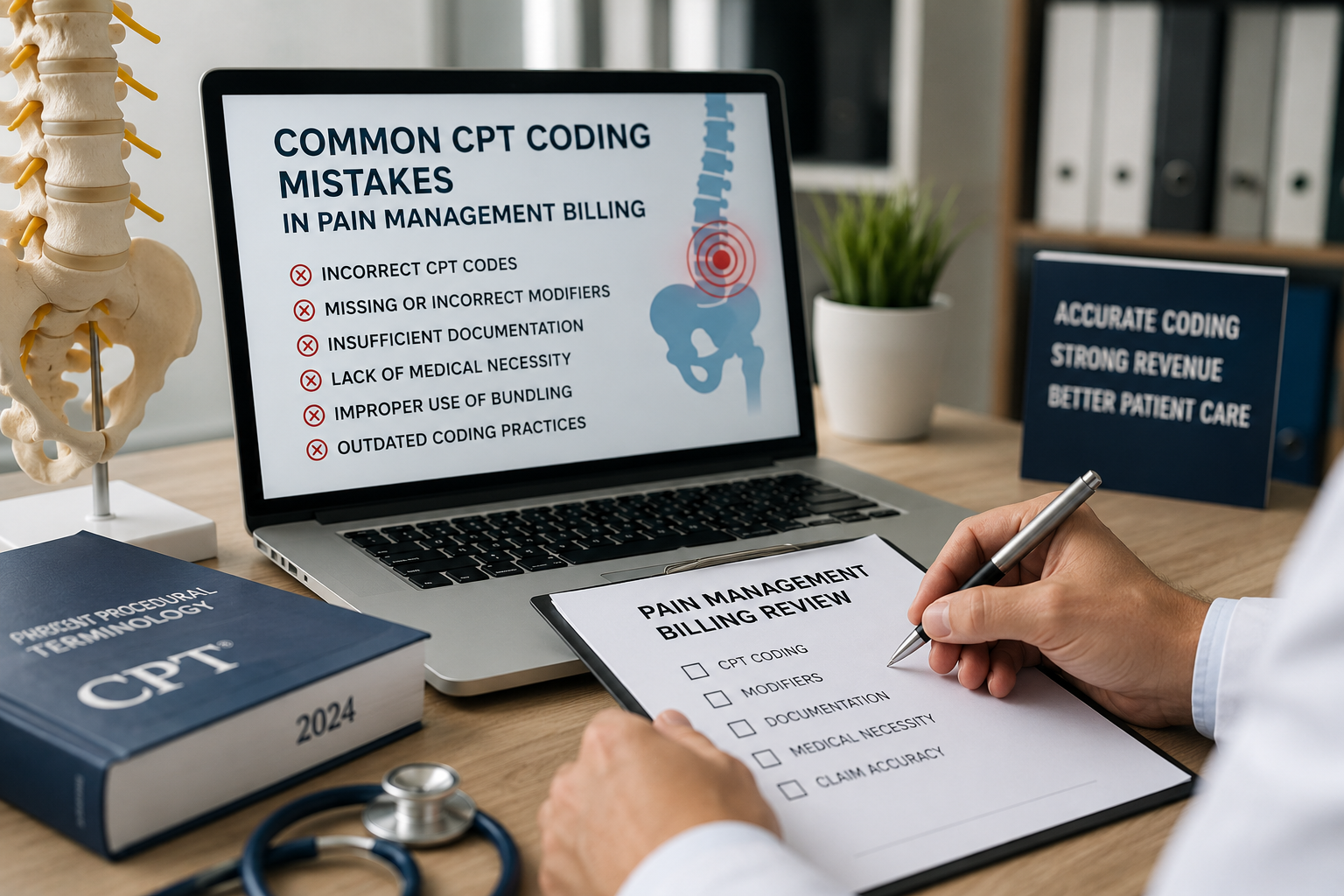
Accurate CPT coding is one of the most important aspects of Pain Management Billing. Even minor coding errors can result in claim denials, delayed reimbursements, compliance issues, and lost revenue for pain management practices. Since pain management involves a wide range of procedures—from nerve blocks and epidural steroid injections to radiofrequency ablation and trigger point injections—coding requires precision and up-to-date knowledge of payer guidelines.
Many providers focus primarily on patient care while overlooking the complexities of medical billing. That's why many clinics rely on professional Pain Management Billing Services to improve coding accuracy, reduce denials, and maximize reimbursements.
In this article, we'll discuss the most common CPT coding mistakes in pain management billing and provide practical tips to help your practice improve claim acceptance rates.
Why Accurate CPT Coding Matters in Pain Management Billing
Current Procedural Terminology (CPT) codes describe the medical services and procedures performed by healthcare providers. Insurance companies use these codes to determine medical necessity, process claims, and calculate reimbursements.
Incorrect coding can lead to:
-
Increased claim denials
-
Delayed payments
-
Revenue loss
-
Insurance audits
-
Compliance risks
-
Additional administrative work
Maintaining accurate coding is essential for an efficient Pain Management Billing process and long-term financial stability.
1. Using Incorrect CPT Codes for Pain Procedures
One of the most common mistakes is selecting the wrong CPT code for a performed procedure.
Pain management treatments often involve similar procedures with different coding requirements depending on:
-
Injection location
-
Imaging guidance
-
Number of spinal levels treated
-
Laterality
-
Type of procedure performed
Using an incorrect code may result in claim rejection or underpayment.
Tip: Always verify the latest CPT coding guidelines before submitting claims.
2. Forgetting Required CPT Modifiers
Modifiers provide additional information about a performed service and are often required in pain management billing.
Missing or incorrect modifiers may cause:
-
Claim denials
-
Duplicate procedure edits
-
Reduced reimbursement
-
Incorrect payment calculations
Common situations requiring modifiers include:
-
Bilateral procedures
-
Multiple procedures performed during the same visit
-
Distinct procedural services
-
Repeat procedures
Accurate modifier usage helps ensure clean claims and faster reimbursement.
3. Coding Procedures Without Proper Documentation
Every billed procedure must be supported by complete medical documentation.
Missing documentation may include:
-
Physician notes
-
Procedure details
-
Imaging reports
-
Medical necessity
-
Patient history
-
Treatment plans
If documentation doesn't support the billed CPT code, insurers may deny payment even when the procedure was correctly performed.
Strong documentation is a critical component of successful Pain Management Billing Services.
4. Ignoring Medical Necessity Requirements
Insurance carriers require providers to demonstrate why a procedure was medically necessary.
Common issues include:
-
Missing diagnosis codes
-
Incomplete patient history
-
Lack of conservative treatment documentation
-
Insufficient clinical findings
Without adequate medical necessity documentation, claims are frequently denied regardless of coding accuracy.
5. Incorrect Billing for Multiple Procedures
Pain management physicians often perform multiple procedures during a single patient visit.
Mistakes include:
-
Billing procedures separately when bundled
-
Failing to identify payable multiple procedures
-
Missing modifier requirements
-
Reporting duplicate services
Understanding payer-specific bundling rules helps reduce coding errors and improve reimbursement.
6. Not Following Updated CPT Guidelines
CPT codes and payer policies are updated every year.
Practices that continue using outdated coding references may experience:
-
Higher denial rates
-
Payment delays
-
Compliance issues
-
Increased appeals
Routine staff education and regular coding updates are essential for maintaining billing accuracy.
7. Incorrect Diagnosis and CPT Code Pairing
Diagnosis codes (ICD-10-CM) must support the billed CPT procedure.
Examples of common problems include:
-
Diagnosis doesn't justify the procedure
-
Incorrect ICD-10 code selection
-
Missing secondary diagnosis codes
-
Inconsistent documentation
Proper diagnosis-to-procedure matching strengthens claim approval rates.
8. Failing to Verify Insurance Coverage Before Treatment
Some pain management procedures require:
-
Prior authorization
-
Referral documentation
-
Specific payer approval
-
Coverage verification
Submitting claims without confirming coverage often results in avoidable denials.
Insurance verification should always be part of an effective Pain Management Billing workflow.
9. Delayed Claim Submission
Even accurately coded claims can be denied if submitted after payer filing deadlines.
Late submissions may occur because of:
-
Missing documentation
-
Coding delays
-
Administrative bottlenecks
-
Incomplete patient information
Timely claim submission improves cash flow and reduces administrative burden.
10. Handling Billing Internally Without Specialty Expertise
Pain management is one of the most complex medical specialties from a billing perspective.
General medical billing teams may not always be familiar with:
-
Pain procedure coding
-
National Correct Coding Initiative (NCCI) edits
-
Payer-specific billing rules
-
Modifier requirements
-
Documentation standards
Partnering with experienced Pain Management Billing Services can significantly reduce coding errors while improving reimbursement rates and overall revenue cycle performance.
Best Practices for Accurate Pain Management Billing
To minimize CPT coding mistakes, practices should:
-
Stay current with annual CPT code updates.
-
Conduct regular coding audits.
-
Train billing and coding staff consistently.
-
Verify insurance eligibility and prior authorizations before treatment.
-
Ensure complete and detailed clinical documentation.
-
Review claims carefully before submission.
-
Monitor denial trends to identify recurring issues.
-
Work with experienced specialty billing professionals when needed.
These proactive measures can help improve claim acceptance rates and support a healthier revenue cycle.
Conclusion
Accurate CPT coding plays a vital role in successful Pain Management Billing. Even small coding mistakes can lead to denied claims, delayed reimbursements, and unnecessary administrative work. By staying updated on coding guidelines, maintaining complete documentation, and following payer-specific requirements, pain management practices can reduce billing errors and improve financial performance.
For many providers, partnering with specialized Pain Management Billing Services offers additional peace of mind. Experienced billing professionals understand the complexities of pain management coding, helping practices streamline claim submissions, increase first-pass acceptance rates, and focus more time on delivering exceptional patient care.
Whether your clinic performs routine injections or advanced interventional pain procedures, investing in accurate coding and efficient billing processes is essential for long-term success.
- Business
- Technology
- Finance
- Health
- Fashion
- Lifestyle
- Travel
- Food
- Education
- Real Estate
- Automobile
- Entertainment
- Sports
- Pets
- Home Decor
- Gardening
- Parenting
- Wedding
- Beauty
- Gaming
- Photography
- Music
- Movies
- News
- Politics
- Religion
- Astrology
- Law
- Insurance
- Jobs
- Freelancing
- Remote Work
- Blogging
- E-commerce
- WordPress
- OpenCart
- Social Media
- Graphic Design
- Web Design
- Programming
- Mobile Apps
- Artificial Intelligence
- SaaS
- Cyber Security
- Cloud Computing
- Hosting
- SEO
- Content Writing
- Email Marketing
- Affiliate Marketing
- YouTube
- Podcasting
- Interior Design
- DIY
- Crafts
- Art
- Architecture
- Environment
- Agriculture
- Animals
- Fishing
- Hunting
- Survival
- Outdoor
- Fitness
- Yoga
- Meditation
- Mental Health
- Skin Care
- Hair Care
- Makeup
- Jewelry
- Sarees
- Salwar Kameez
- Lehenga Choli
- Kurtis
- Men Fashion
- Women Fashion
- Kids Fashion
- Footwear
- Bags
- Watches
- Luxury
- Shopping
- Coupons
- Electronics
- Smartphones
- Laptops
- Tablets
- Cameras
- Home Appliances
- Kitchen
- Furniture
- Cleaning
- Baby Care
- Senior Care
- Relationships
- Self Improvement
- Motivation
- Quotes
- Festivals
- Events
- Careers
- Remote Work
- Productivity
- Wholesale
- Manufacturing
- Import Export
- Logistics
- Supply Chain
- Human Resources
- Customer Service
