
How Accurate Custom Digitizing Improves Stitch Quality
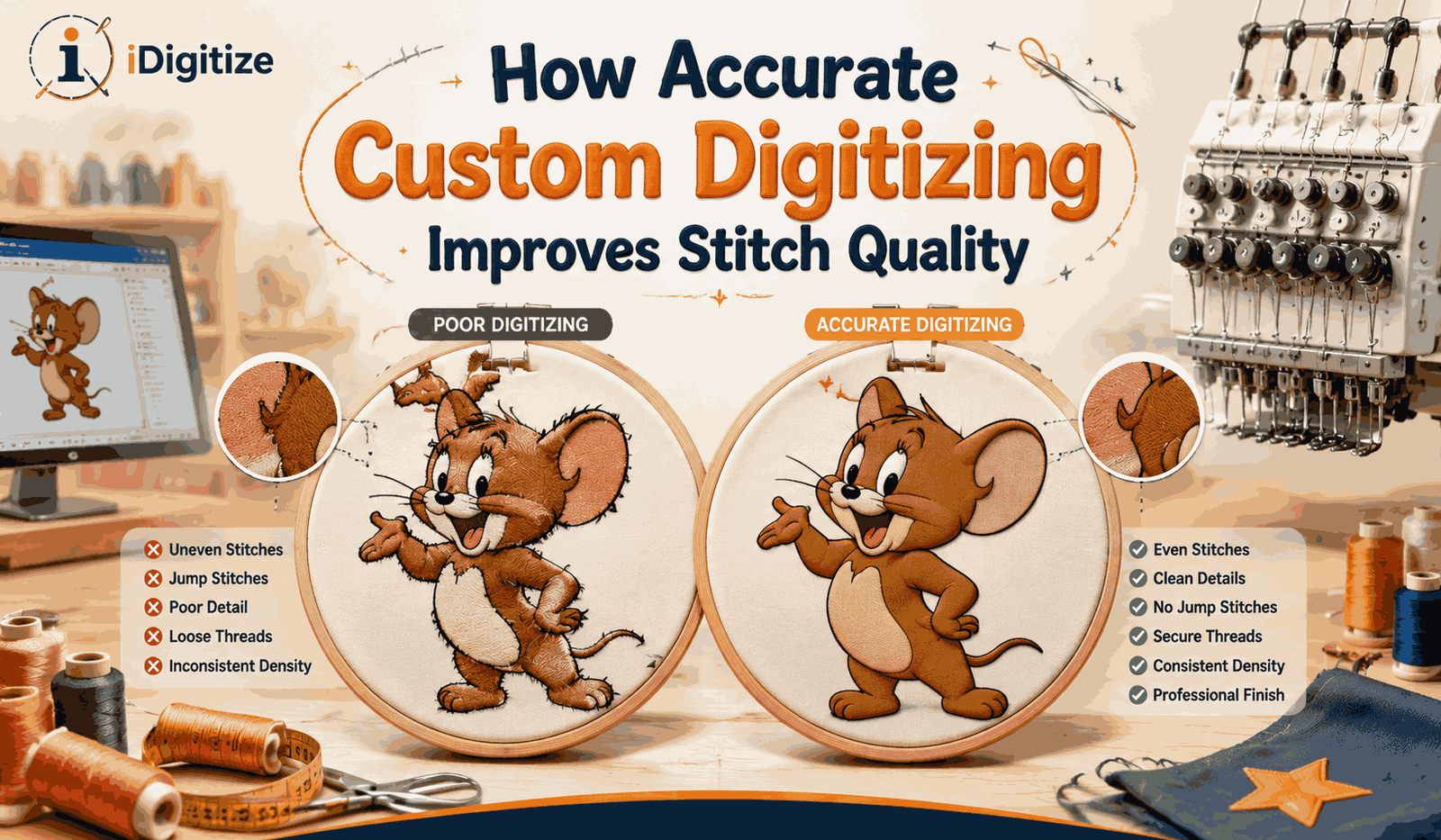
In machine embroidery, even the smallest technical mistake can affect the final output. A design that looks perfect on screen may lose its structure when stitched on fabric if the digitizing is not done correctly. This is why precision in file creation plays a critical role in production quality.
How Accurate Custom Digitizing Improves Stitch Quality and Reduces Errors becomes clear when we understand how stitch placement, density, and direction directly influence the final embroidery outcome. Proper digitizing ensures clean edges, stable stitching, and fewer machine disruptions during production.
Understanding the Role of Custom Digitizing
Custom digitizing is the process of converting artwork into a stitch file that embroidery machines can execute. It is not a simple conversion but a technical planning stage where every stitch type, angle, and sequence is defined manually.
This process determines how the machine will interpret the design on different fabrics, making it a key factor in achieving professional embroidery results.
How Accurate Digitizing Improves Stitch Quality
Better Stitch Placement
Accurate digitizing ensures each stitch is placed with precision. This helps maintain smooth outlines, balanced fills, and consistent spacing across the entire design.
Controlled Stitch Density
Proper density settings prevent designs from becoming too tight or too loose. This balance improves fabric flexibility and avoids unnecessary stress on threads.
Clean Edge Definition
Well-digitized files create sharp and clear edges, especially in logos and text-based designs. This improves overall readability and visual appeal.
How It Reduces Embroidery Errors
Fewer Thread Breaks
Correct stitch sequencing and tension control reduce strain on threads, lowering the chances of breakage during machine operation.
Minimized Design Distortion
When digitizing is accurate, the design maintains its shape even on stretchable or delicate fabrics, preventing warping or misalignment.
Reduced Machine Downtime
Optimized stitch paths reduce unnecessary stops and trimming, allowing smoother production flow and better efficiency.
Importance of Fabric-Specific Digitizing
Every fabric reacts differently to embroidery. Cotton, polyester, denim, and knit materials all require different stitch settings.
Accurate digitizing adjusts underlay, pull compensation, and stitch direction based on fabric type. This prevents puckering, sinking, or stretching of the design during stitching.
Common Causes of Stitching Errors
Many embroidery issues are not caused by machines but by poor digitizing decisions. Incorrect stitch density, lack of underlay, and improper path planning are major reasons behind flawed results.
Ignoring design size adjustments for embroidery also leads to poor output, especially in small text or detailed artwork.
Professional Approach to Error-Free Digitizing
Experienced digitizers follow a structured workflow. They analyze artwork carefully, select appropriate stitch types, and test files before production.
They also consider machine type, thread thickness, and fabric behavior to ensure the final output remains consistent across multiple runs.
Conclusion
Accurate digitizing is a key factor in achieving high-quality embroidery output. It directly influences stitch clarity, machine performance, and overall production efficiency. When digitizing is done with precision, errors are significantly reduced, and the final design maintains its intended look on every fabric type.
For businesses aiming for consistent embroidery quality, investing in accurate digitizing is not optionalit is essential.
FAQs
1. What is custom digitizing in embroidery?
It is the process of converting artwork into a machine-readable stitch file used for embroidery production.
2. How does digitizing affect stitch quality?
It controls stitch placement, density, and direction, which directly impact the final appearance.
3. Can poor digitizing cause machine errors?
Yes, incorrect digitizing can lead to thread breaks, misalignment, and machine stoppages.
4. Why is fabric considered in digitizing?
Different fabrics react differently to stitches, so settings must be adjusted accordingly.
5. Is manual digitizing better than automatic tools?
Yes, manual digitizing provides better control, accuracy, and customization for professional results.
- Business
- Technology
- Finance
- Health
- Fashion
- Lifestyle
- Travel
- Food
- Education
- Real Estate
- Automobile
- Entertainment
- Sports
- Pets
- Home Decor
- Gardening
- Parenting
- Wedding
- Beauty
- Gaming
- Photography
- Music
- Movies
- News
- Politics
- Religion
- Astrology
- Law
- Insurance
- Jobs
- Freelancing
- Remote Work
- Blogging
- E-commerce
- WordPress
- OpenCart
- Social Media
- Graphic Design
- Web Design
- Programming
- Mobile Apps
- Artificial Intelligence
- SaaS
- Cyber Security
- Cloud Computing
- Hosting
- SEO
- Content Writing
- Email Marketing
- Affiliate Marketing
- YouTube
- Podcasting
- Interior Design
- DIY
- Crafts
- Art
- Architecture
- Environment
- Agriculture
- Animals
- Fishing
- Hunting
- Survival
- Outdoor
- Fitness
- Yoga
- Meditation
- Mental Health
- Skin Care
- Hair Care
- Makeup
- Jewelry
- Sarees
- Salwar Kameez
- Lehenga Choli
- Kurtis
- Men Fashion
- Women Fashion
- Kids Fashion
- Footwear
- Bags
- Watches
- Luxury
- Shopping
- Coupons
- Electronics
- Smartphones
- Laptops
- Tablets
- Cameras
- Home Appliances
- Kitchen
- Furniture
- Cleaning
- Baby Care
- Senior Care
- Relationships
- Self Improvement
- Motivation
- Quotes
- Festivals
- Events
- Careers
- Remote Work
- Productivity
- Wholesale
- Manufacturing
- Import Export
- Logistics
- Supply Chain
- Human Resources
- Customer Service
